
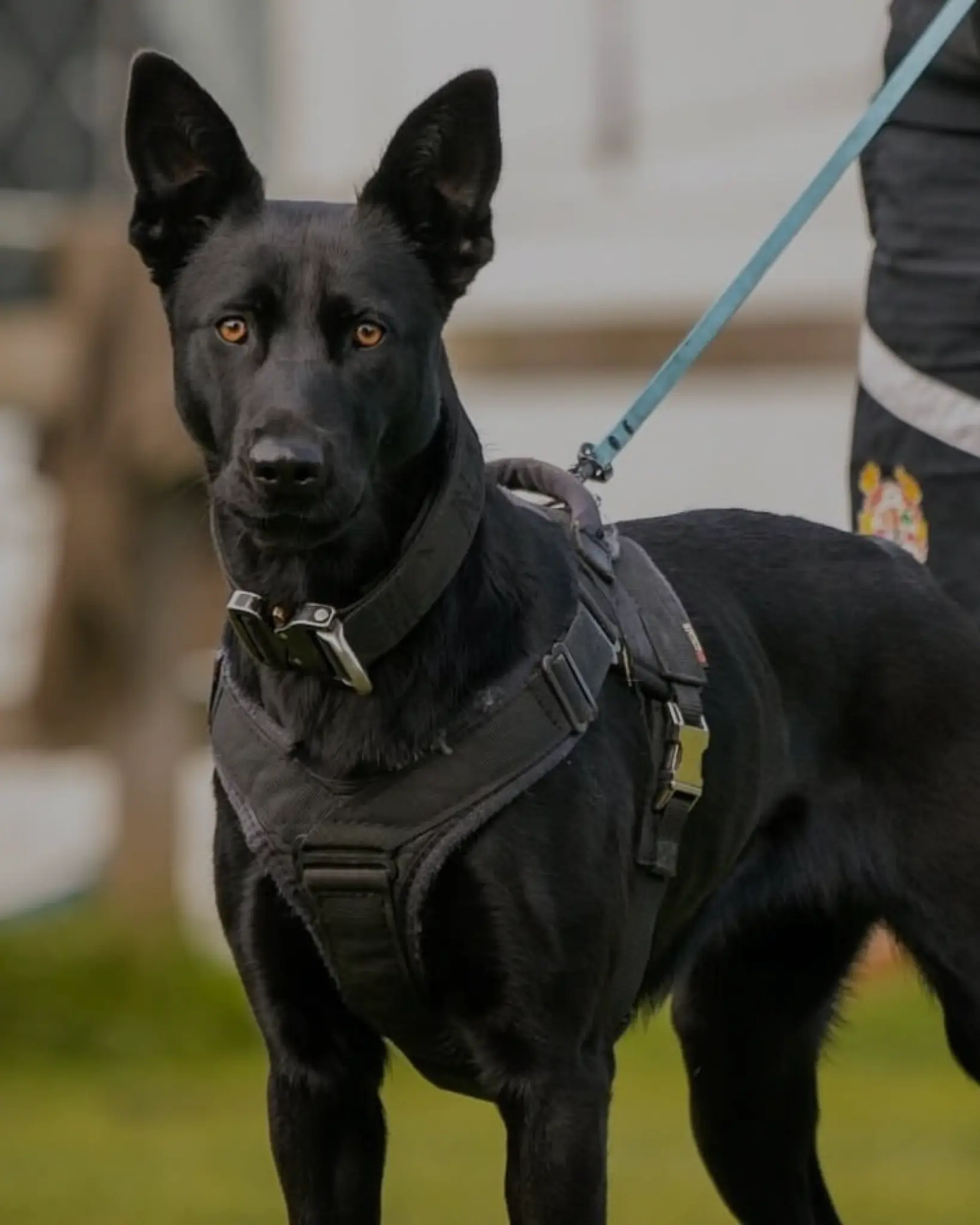
A recall that works at home still needs practice around the distance, scent and movement of an outdoor walk. Protect the cue, make returning worthwhile and build one manageable change at a time in safe conditions. This guide covers that wider progression; for sniffing that repeatedly takes over, read Working Cocker Spaniel recall around scents. If your dog returns but immediately races far ahead again, helping a Springer Spaniel stay closer addresses contact throughout the walk rather than recall alone.
Knowing your dog’s breed is not a diagnosis or a complete training plan. The useful question is more specific: what does your dog notice, how close is it, how far away are you, and can they still turn back to you? Those details tell you where to start.
Why an indoor recall does not automatically travel outside
A cue learned in the lounge has a quiet background and a short route back to you. On a walk, the same word may be competing with a scent trail, movement or another dog at a distance. That does not mean the dog has forgotten the word. It means the outdoor version needs its own easy repetitions before it can become dependable.
I recommend treating each new place as a fresh, easier version of the exercise. Begin closer to your dog and farther from the distraction than you think you need to be. A dog who can come back from three metres in a quiet field may need to begin beside you when a jogger is visible, then build distance later.
Make the cue and reward clear
A recall is easier to strengthen when everyone uses the same short cue and the dog knows what happens next. Decide what counts as the completed behaviour for your dog: perhaps turning promptly, coming into reach, then accepting a lead clip or a brief collar hold. The last part is worth teaching and rewarding separately in a quiet place, rather than reaching for the dog as they arrive on a difficult recall.
- Get attention, then use the cue once. Say your dog's name if it reliably helps them orient to you, then give the recall cue once in a clear, normal voice. Open your body, take a few steps away or move backwards to make the route obvious. Repeating the word while the dog continues away gives them practice hearing it without acting on it.
- Mark the decision to return. As your dog commits to coming back, a consistent marker such as good can tell them that the choice was right. Deliver the reward when they reach you, rather than throwing it away from you. Food, a toy or access to something the dog genuinely values can work; choose the reward for the individual dog and the difficulty of the set-up.
- Pay the full return. In early practice, make every successful return worth taking. Give more value for a return away from a real distraction than for an easy check-in beside you. If food is part of frequent practice, account for it within the dog's overall ration.
- Do not make every recall end the good bit. Where the environment is controlled and safe, sometimes clip the lead, reward, then release your dog back to sniff or continue the walk. This helps prevent the cue from always predicting that access to the environment is over.
If your current cue has been used repeatedly in situations where the dog cannot respond, do not keep testing it. Use management to leave the situation, then use that cue only in set-ups where you can reinforce it. A new cue is not automatically the answer; first make the existing cue meaningful again through easier, well-paid repetitions.
Build distance and distraction in a deliberate order
Change one part of the task at a time. I normally build distance first in a familiar, low-distraction area. Once the dog can respond there, I bring in a low-value distraction while reducing the distance again. Only after that response is comfortable do I gradually increase the distance from the distraction or introduce a more difficult one.
- Start in an enclosed, familiar space. Call from a few steps away when your dog is already able to notice you and pay every return.
- Move to a quiet outdoor area with a lead or long line as the safety plan. Keep the first outdoor recalls short and easy rather than waiting for the dog to become absorbed in a scent.
- Add one mild, planned distraction at close range. This could be a person standing still at a distance or an interesting but controllable patch of grass. If the dog cannot turn back, increase space or lower the distraction instead of repeating the cue.
- Practise the same skill in a different quiet location. New ground, weather and movement can make a familiar cue feel less familiar to the dog, so make the first repetitions easier again.
This is a progression, not a race towards off-lead access. Do not use traffic, livestock, wildlife or a crowded path as the next test. A lead or long line remains the sensible option whenever the dog's response is not ready for that environment.
Use successful repetitions as your guide
Do not judge progress only by whether a dog eventually gets back to you. After each short session, note the set-up: location, the distraction and its distance, how far your dog was from you, whether you said the cue once, how quickly the dog turned, what reward you used, and whether the line had to prevent access to the distraction.
A successful repetition is one where the dog can hear the cue, turn and return without you needing to repeat it or physically manage them away from the distraction. A run of those responses says the current set-up is manageable; it does not prove recall will work in every place. When the log shows hesitation, a second cue or line intervention, make the next repetition easier. That is useful information, not a reason to punish or pressure the dog.
Use a long line as a safety tool, not a test
A long line gives room to practise while preventing a dog from rehearsing a dash towards something unsafe. Attach it to a well-fitted harness, inspect the line, harness and clip before heading out, and choose open ground with enough space. Keep the line clear of hands and legs rather than wrapping it around either; gloves can help with handling. Manage slack and distance so the dog cannot run at full speed into the end of the line.
Do not rely on a long line to create an emergency response in the moment. An emergency cue is taught separately in low-risk practice and should not first be tried during a real emergency. Our long-line and emergency recall guide explains how to keep those jobs distinct. If the set-up cannot safely prevent contact with a hazard, it is too difficult for recall practice.
Common mistakes that make outdoor recall harder
- Calling only when it is time to leave. Add easy, rewarded check-ins during safe walks so the cue does not only predict the end of access.
- Adding distance, a new location and a difficult distraction together. Reset one variable so your dog has a clear chance to get the answer right.
- Waiting for a dog to be fully fixated before practising. Work below that point, when the dog can still notice you. If fixation, fear or loss of control is already present, create distance and use your management plan.
- Grabbing at the collar as the dog arrives. Teach a calm collar touch or lead clip as a separate, rewarded handling skill. It is easier for the dog to understand and safer than turning each return into a scramble.
- Assuming adolescence is defiance. Changes in attention, the environment and the stage of learning can all show up as patchy responses. Read more about building recall through adolescence if this is the pattern you are seeing.
A neutral note on e-collar distance-command searches
Some owners search for an e-collar answer when distance commands are unreliable. A device does not replace a cue the dog already understands, a lead or long line, sensible access control, or a safety plan around hazards. Where e-collar conditioning is assessed as suitable, it should be individually coached around existing learned cues, not treated as a do-it-yourself setting experiment. Suspected pain, a sudden behaviour change, severe fear, aggression or a bite history need veterinary and suitably qualified behaviour support rather than a distance-command fix.
When to pause recall practice
Pause the exercise and make the situation safer if your dog cannot disengage, the line is difficult to manage, or the surroundings make a mistake high-risk. A sudden change in behaviour or a concern about pain is a reason to speak to a vet. For safe motivation work with a toy, see how to use tug as a reward for a working-breed dog; any redirected biting or resource guarding calls for calm separation without confrontation and appropriate professional assessment.
Further reading: Dogs Trust guidance on recall training and Royal Kennel Club advice on teaching recall.
Recall training questions
Does my dog know recall if they do it perfectly at home?
They know part of the exercise in that setting. Outdoors adds new sights, scents, movement and distance, so begin again with an easier version in each new place. A home response is useful groundwork, but it is not evidence that the dog is ready for every outdoor situation.
How do I know when it is time to make recall harder?
Look for repeated one-cue returns in the current set-up: your dog notices the cue, turns and returns without you repeating it or using the line to prevent access to something else. Then make just one small change, such as a little more distance or a mild distraction, not both at once.
What should I do if my dog ignores the cue on a long line?
Do not repeat the cue or turn the moment into a confrontation. Use the line only to keep the dog from reaching the distraction while you get to a safer, easier position. Review the note from that repetition, then lower the difficulty next time by increasing distance from the distraction, shortening the recall or choosing a quieter place.
Should I use a different word for recall?
Keep a cue that still works in easy settings and protect it from being used when your dog is unlikely to respond. If it has been practised many times without a return, rebuild its value in simple, well-rewarded sessions before deciding whether a separate cue is needed. Any new cue should first be conditioned in low-risk practice, not introduced at the most difficult point of a walk.