
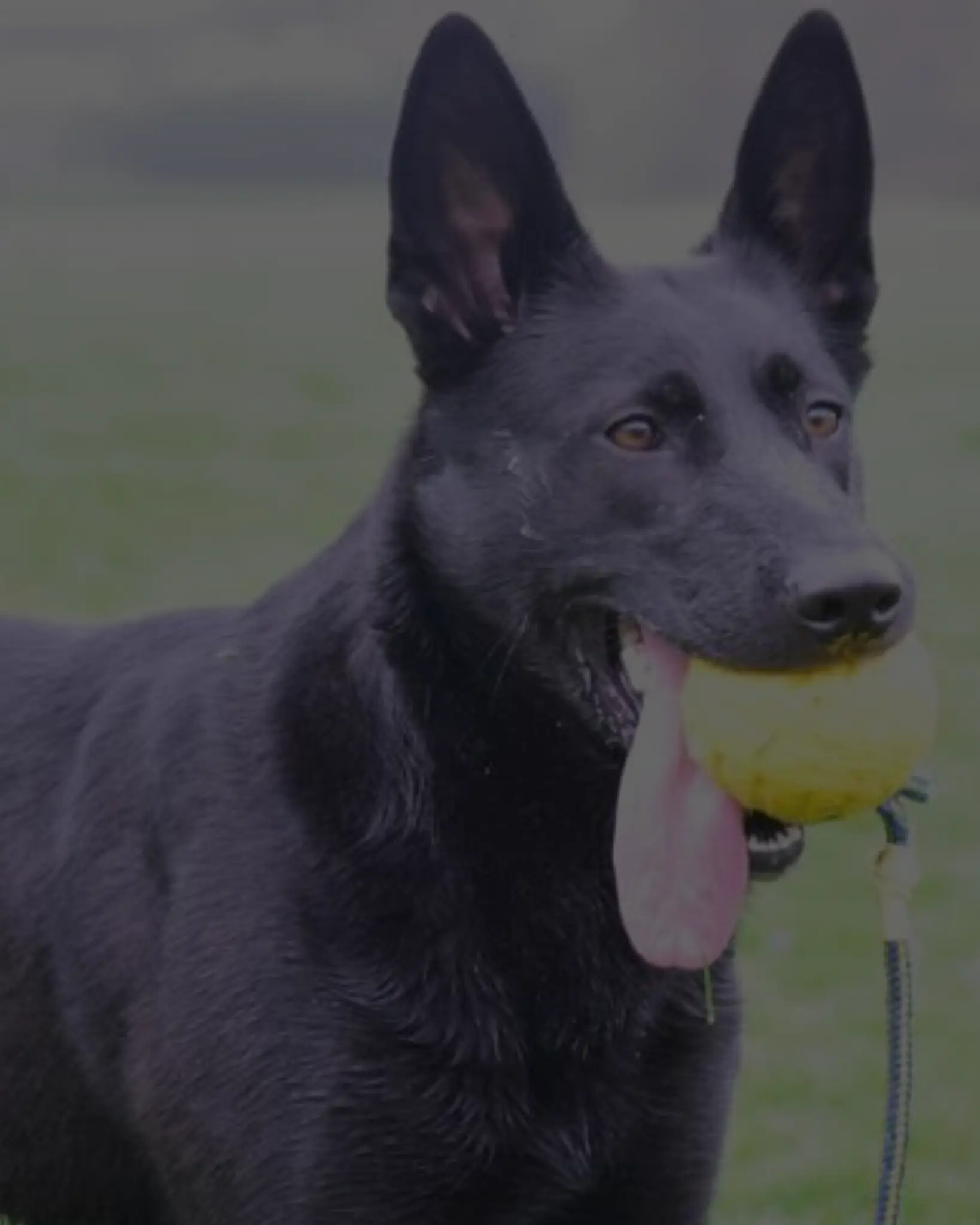
A Springer Spaniel can turn a walk into a long-distance conversation: your dog disappears ahead, you call, they return briefly and then race away again. Even if they eventually come back, constantly working at that distance can make you feel disconnected.
If your Springer Spaniel is running too far away, work on staying in contact throughout the walk. Recall remains important, but it should not be your only way of influencing where the dog goes.
Set a distance you can manage safely
Begin in a secure enclosed space or use a safely handled long line attached to a suitable harness where appropriate. Do not allow the dog to build speed into the end of the line. Keep sessions away from roads, livestock and wildlife.
The useful distance depends on the setting and your dog's current skills. Visibility, other path users and hazards matter more than choosing an arbitrary number of metres. If your dog keeps vanishing into cover, the current freedom is greater than you can safely manage.
Make checking in worthwhile
Reward your spaniel for looking back, approaching you or choosing to travel nearby. Deliver the reward promptly so the connection is clear. You do not need to call every time; voluntary contact is a skill worth noticing.
Sometimes reward close to you, then give permission to explore again within the managed area. This gives your dog a reason to return without every approach ending the walk. Keep your own route predictable enough that your dog can follow you.
Put some interesting work near you
In a safe, quiet area, try an easy search for a suitable toy placed nearby while your dog watches. Keep the task short and achievable. The purpose is to share an activity within a manageable space, not to create a more exciting reason to race away.
Choose toys your dog can use safely and supervise the activity. If searching becomes frantic or your dog stops responding, reduce the difficulty and take a break. More intensity is not necessarily better engagement.
Practise changes of direction together
In the enclosed space, use a familiar cue and reward your dog for turning with you. Practise while they are close and still responsive, then gradually try slightly greater distances. Avoid hiding from your dog or deliberately making them panic to keep you in sight.
If the walk becomes a repeated cycle of running away and being called back, shorten the available distance and rebuild the easier pattern. For more detail on safe line handling, see long-line recall foundations.