
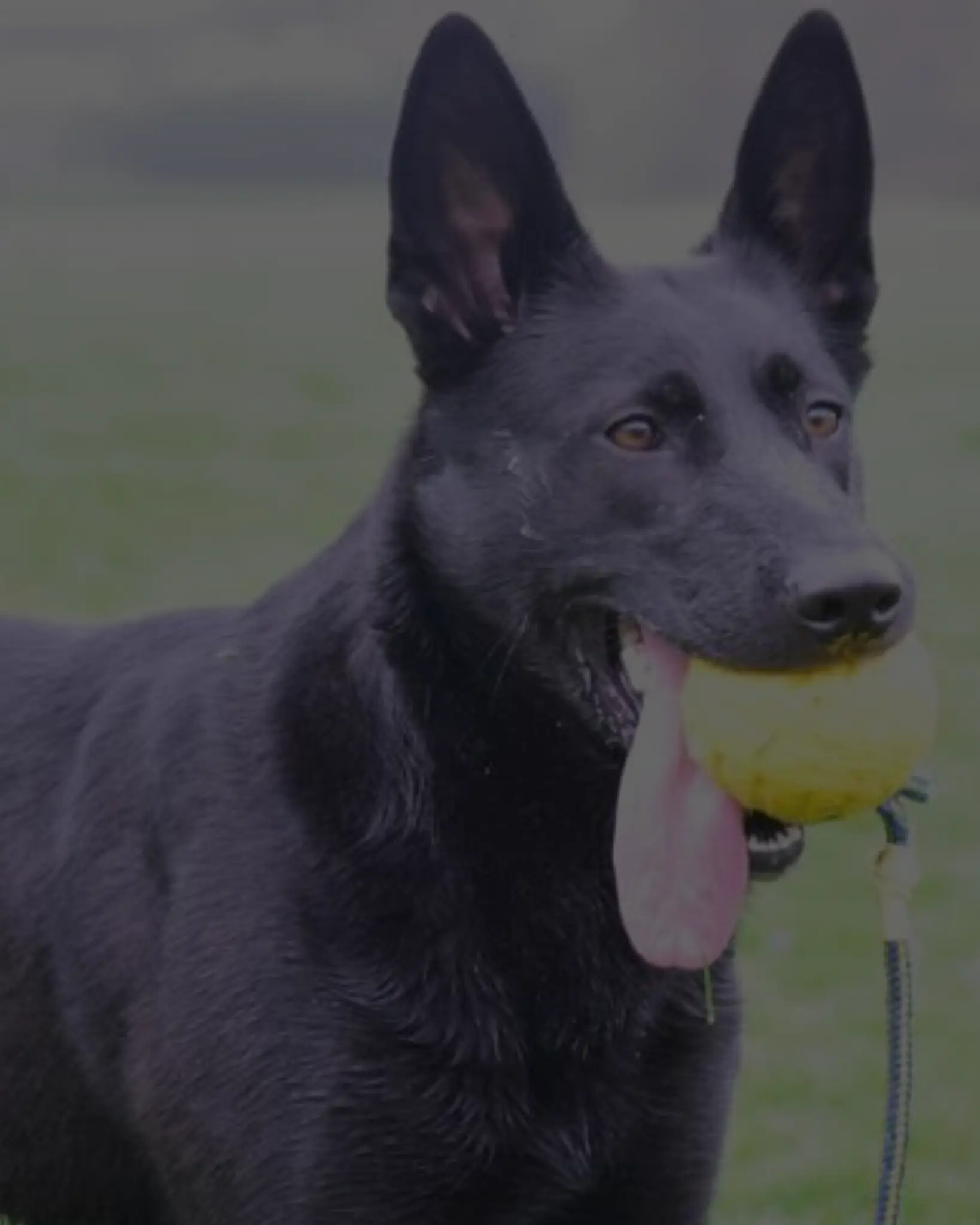
An out cue for a working-breed dog should mean a calm, voluntary release of the toy, followed by a reward the dog understands. Teach that exchange before asking for fast obedience around a tug, and keep the first games short enough that your dog can think rather than boil over.
Tug can become a useful obedience reward when it is brought in after the behaviour you want, in the position you want it repeated. Food still has a place: use it to build a safe exchange, to revisit the foundations in a new setting, or whenever it helps your dog let go comfortably.
Give each word one job
Choose one simple cue for releasing the toy, such as out. Say it once; it asks the dog to let the toy go. A marker is different: it is a short word or click that pinpoints the instant the dog has released. A separate permission cue, such as get it, can tell the dog that the tug game is restarting.
That sequence matters. The useful order is: cue the out, the dog opens their mouth, mark that release, then deliver the next reward. If the next reward is tug, present it and give the permission cue to start again. Avoid using one word for the release, the marker and the restart. It leaves the dog guessing which action earned what.
Set up a calm first session
Begin in a familiar, uncluttered room on a surface where neither of you is likely to slip. Use a toy your dog will take readily but has never guarded, and make sure it is in sound condition. I would start with gentle, predictable movement and a few seconds of play, not frantic pulling or a contest over possession.
Working breeds are not all alike. One dog may find a short tug game easy to leave; another may become more intense as the toy moves. Watch the dog in front of you. Loose movement, a quick return to you and an easy release are reasons to continue. If arousal rises, make the game smaller or stop for the day.
Build the out cue through an exchange
Practise the exchange with a low-value toy first, rather than with a prized toy, chew or found item. The point is to teach the pattern safely, not to see whether the dog will fail.
- Start a brief game. Offer the toy, let your dog take it, then make it still after a moment. Keep your hands away from the dog’s mouth and do not pull back against them.
- Make the exchange easy. Say out once as you begin to present a piece of food or another suitable toy. At this early stage, the food or second toy is help for the release, not a lure to wave for several seconds.
- Mark the opening mouth. The instant the dog releases the first toy, give the marker. Then give the food or animate the second toy. The marker comes after the release, not when you repeat the cue.
- Re-engage or finish quietly. After the food, you can offer the tug again with your permission cue. Giving the original toy back in some repetitions helps the dog learn that an out does not always end access to the game. In other repetitions, take the planned pause while the dog is calm.
- Create a little space before the help appears. When the dog is releasing readily, say out a fraction earlier, then mark and reward the release. Increase that gap slowly. If the dog hesitates, return to the easier exchange instead of repeating the cue.
Two or three good exchanges are enough for an early session. Pause while your dog can disengage and settle. Practise this simple version in more than one calm place before expecting it around a busy walk, visitors or a more valuable toy. Gradual increases in distraction are safer than turning every new situation into a test.
Turn the restart into an obedience reward
Once your dog understands the exchange, use tug after a behaviour they already know in that quiet setting. Keep the toy out of the picture while you give the obedience cue, so the dog has a fair chance to respond to the cue rather than staring at a moving toy.
- Ask for one familiar, low-arousal response, such as coming into the position you have already trained or giving you attention at close range.
- Mark that response as it happens.
- Bring out the tug at the position that matches the behaviour, say the permission cue, and play briefly.
- Ask for out, mark the release, then either restart the game or use food and take a quiet break.
Keep the exercise simple. I would rather see one clear response, a clean release and a composed restart than a long string of cues while the dog becomes louder, more grabby or less able to hear you.
Reward position is part of the lesson
Where the tug appears can influence where the dog expects to work next. Decide that position before you start. To reinforce a close position beside you, bring the tug out on that side after the marker rather than waving it across your body. To reward a front or recall arrival, make the toy appear on your centre line after the dog reaches you, not several steps away where it draws them past you.
Keep the toy at a comfortable height and present it so your hands are not the target. If the dog is launching at hands, crowding you or repeatedly grabbing at clothing, the game is too difficult or too intense for the current setup. Lower the arousal, use a simpler reward, or finish rather than trying to hold the dog in place.
Common mistakes that make an out harder
- Repeating the cue. Say out once, then help at the level you have trained. Repeating it while the dog hangs on can make the word background noise.
- Making every out mean the game is over. Build planned re-engagement into some repetitions. The dog can learn that releasing makes the next good thing possible.
- Removing food too soon. Tug does not have to replace food permanently. Food is a sensible exchange reward and a useful way to rebuild clarity when the environment changes.
- Using a precious item as the first lesson. Do not practise on a chew, a found object or a toy your dog is tense about. Manage those items and return to a low-value training object.
- Turning the toy into a physical contest. Do not prise jaws, pull the toy away, brace or anchor yourself to it, or wait for a frustrated bite to end. Those actions can increase conflict and put hands close to teeth.
When to stop instead of pushing through
Stop the exercise if your dog stiffens over the toy, freezes, hard-stares, growls, lunges, redirects onto your hands, bites towards a handler, or looks frightened. Do not reach in, corner the dog, stay anchored to the tug or try to force a release. Create safe separation without confrontation where possible, manage access to the item, and get appropriate advice before practising again.
Sudden changes around food or toys can also warrant a veterinary conversation, especially if pain may be involved. For guarding, fear, a bite history or any concern that someone could be bitten, seek veterinary and suitably qualified behaviour support rather than treating the next tug session as a fix. Humane World’s resource-guarding guidance lists common warning signs and explains why bite risk needs professional help.
Keep the goal useful outside the game
An out cue learned with a low-value tug in the kitchen is not proof that a dog will release a high-value object outside. Rebuild the skill at an easier level whenever the place, toy or level of excitement changes. The same gradual approach helps with other reward-based skills; see our guide to recall when home success does not transfer outside.
For a detailed, reward-based account of swapping toys and why grabbing or chasing can make exchanges harder, see Purina UK’s guidance on teaching drop and leave it.
Questions about out cues and tug rewards
Should food disappear once tug becomes the reward?
No. Food can remain part of the exchange, especially while you are teaching the out, working in a new place or reducing the intensity of the game. Use the reward that keeps the release clear and comfortable for that dog.
My dog releases for food but not for another tug. What next?
Keep using food for now. Practise easy food-for-toy exchanges, then add a short, calm tug restart after the marked release. Do not remove the food to prove a point or make the dog hang on longer.
How long should a tug-reward practice session be?
End while the dog is still able to release and settle. A few clean repetitions in a quiet setting are more useful than extending the game until the dog is shouting, grabbing or unable to disengage.
Can I use an out cue to take a dangerous item from my dog?
Build the cue in planned, low-risk practice; do not test it by setting up a dangerous item. If your dog has something unsafe, avoid chasing, grabbing or putting your hands near their mouth. Use the safest management available and seek veterinary advice promptly if ingestion or injury may be involved.
What if my dog stiffens, guards or bites towards me during tug?
End the game and do not stay anchored to the toy. Create safe distance without confrontation, manage the toy, and seek veterinary and suitably qualified behaviour support before resuming this work.