
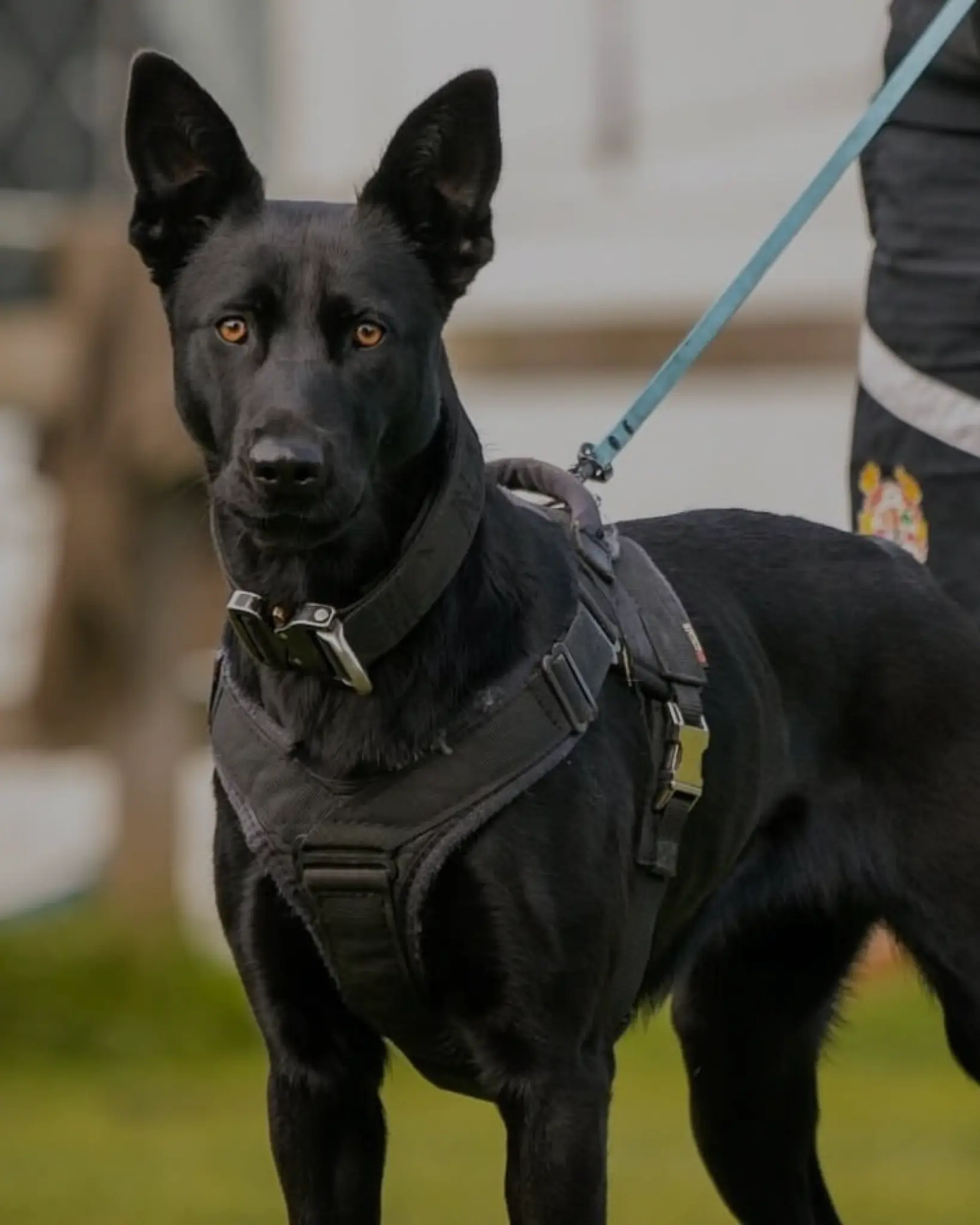
A long line gives your dog room to move while you practise recall; it is a safety back-up, not a way to stop a dog at speed. Start in a quiet, open setting with a well-fitted harness, a line you can handle comfortably and a distance short enough for an easy return.
An emergency recall needs its own foundation. Teach a separate cue when the stakes are low, pay it generously and build it in small stages. Do not wait for a road, wildlife or another urgent situation to find out whether it works.
Set up the long line before asking for recall
Choose a calm, open area with permission to train, well away from traffic, livestock, wildlife, busy paths and anything the dog could reach or chase. A long line is better suited to clear ground than to narrow paths, dense undergrowth or places full of people and dogs. If the setting does not give you room to manage both the dog and the line, choose an easier one.
Attach the line to a suitable, well-fitted harness rather than a collar. Before every session, inspect the webbing, stitching, clip and harness fastening. The line should be a manageable weight for the individual dog and comfortable for you to hold; a line that burns through your hands or drags heavily is not a sensible training set-up.
- Uncoil the line fully before use and check for knots, twists and damage.
- Use two hands and gather spare line in loose folds. Keep it clear of your legs and the dog’s route.
- Never wrap a long line around a hand, wrist, waist or any other part of your body. Gloves can be useful where they improve grip and protect hands, but they do not make a sudden stop safe.
- Begin with only a short, manageable section of line paid out. Your dog does not need the full length to learn the first repetitions.
Keep watching the space as well as your dog. If a cyclist, loose dog, person, wildlife or other distraction appears, shorten the available distance early and move away if needed. I would not allow a dog to run to the end of a line, then rely on the equipment or my grip to absorb the impact. There is no safe training value in a full-speed end-of-line stop.
Build recall in short, successful repetitions
Begin where your dog has a real chance of choosing you: a quiet garden or enclosed space first, then a quiet open area on the long line. Have a reward ready that matters to that dog in that setting. Food is useful for many dogs; for others, a brief game may be more valuable. If tug is part of the reward plan, teach the release separately and keep the game controlled; see how to teach an out before using tug as a reward.
- Let your dog sniff or move a few steps on a loose, short section of line. Do not wait until they are already accelerating away or locked onto something.
- When they are likely to succeed, say the recall cue once. Turn or take a step backwards to make your direction clear.
- As the dog returns, keep the line from tightening. Reward promptly at you when they arrive. Give enough value that returning is worth choosing again.
- If you need to take hold of the harness or gather the line, do it calmly as part of the return, then reward. On some safe repetitions, let the dog go back to sniffing so recall does not always predict that freedom has ended.
- Pause after a few good repetitions. Finish before attention, handling or the environment becomes too difficult.
If the dog does not respond, do not repeat the cue over and over or pull them sharply towards you. Quietly make the next attempt easier: reduce distance, move to a less distracting spot or improve the reward. If you have to use the line to drag the dog in, the exercise was beyond their current level. Reset rather than turning the line into a correction.
Increase one difficulty at a time
Distance, distraction and a new location all change the task. Add only one at a time. For example, build a few more metres in the same quiet place before trying a new area, or use a mild, planned distraction at a generous distance before expecting a response near other dogs or movement.
Keep the slack manageable as distance grows. More line on the ground means more potential for tangles, trip hazards and delayed handling. If the dog begins to gather speed towards a distraction, reduce the distance available before the line goes tight, then leave or create more space. A long line is not permission to practise close to traffic, let a dog pursue wildlife or test whether they can resist a trigger.
Dogs can need the recall rebuilt at an easier level in each new environment. That is information about the training picture, not a reason to make the next repetition harder. If your dog becomes over-excited on walks before you can get a response, work on the wider build-up as well as recall; our guide to over-excitement on walks covers that starting point.
Lay foundations for a separate emergency recall
An emergency cue is a distinct sound or word reserved for a rapid return. It might be a whistle or a short phrase, but it should not be a louder version of a cue the dog hears casually all day. The aim is for that cue to predict an unusually good outcome, not for the long line to force a response.
- Choose one cue everyone will use consistently. Do not use it to call the dog for routine jobs, to end every walk or when you expect them to fail.
- At home, when your dog is close and relaxed, say the cue once and immediately give a generous, special reward. Several small treats in succession or a short, well-loved game can make the payment clear.
- Repeat this in brief sessions until the sound reliably makes the dog turn towards you. Then ask for a very short return in a quiet, enclosed place and reward at your side.
- Move to a calm outdoor setting with the long line, still at a short distance. Cue once, reward the return generously and, where safe, sometimes release the dog back to sniff or explore.
- Only after many easy successes should you add a small, planned distraction at distance. Keep the emergency cue for rehearsals you can reinforce, rather than spending it on difficult situations.
This is foundation work, not an emergency test. A dog heading towards a road, wildlife or another hazard needs management and distance before that point wherever possible. The long line helps prevent rehearsal while you teach; it does not create a guaranteed response or make off-lead access appropriate around wildlife.
Common long-line and recall mistakes
- Giving out the whole line too soon. Start with the amount of slack you can keep clear and add distance gradually.
- Using the line as a brake. Do not let a dog hit the end at speed, jerk the line or pull them back to you. Set the next repetition up earlier and closer.
- Wrapping or stepping through the line. It increases the chance of hand, leg and entanglement injuries. Keep loose folds outside your body and keep moving feet clear.
- Calling after the dog has already chosen a chase or greeting. Rehearse the cue before that point, at a distance where the dog can succeed. Do not use traffic, wildlife or another dog as a recall test.
- Making every return mean the lead goes on and the walk ends. Reward the return and include safe re-releases so coming back does not consistently end access to the environment.
- Repeating the cue or showing frustration. One cue followed by a well-paid return builds clearer information than a string of calls. If it fails, lower the difficulty next time.
Stop the session if the line becomes tangled, the dog is escalating or the setting changes beyond what you can safely manage. Pain, a sudden behaviour change, severe fear, redirected biting, a bite history or serious conflict around dogs or people calls for veterinary advice and appropriately qualified behaviour support before using close-exposure long-line exercises.
For a concise external safety reference, Battersea explains why long lines are attached to a harness, why slack needs managing and why open surroundings matter in its long-line guidance. Dogs Trust also sets out a gradual recall progression using a long line attached to a harness in its recall training advice.
Long-line and emergency recall questions
How long should a recall-training line be?
Use enough length to give the dog a little freedom in clear ground, but not more than you can safely keep clear and manage. Start with only a short section of any long line paid out. There is no single right length: the dog’s size, speed, the line’s weight, the space and your handling all matter.
Should a long line attach to a collar or a harness?
Use a suitable, well-fitted harness for a long line rather than a collar. Check the harness and clip before each session, and still prevent a sudden end-of-line impact. A harness is not a reason to let the dog hit the line at speed.
What if my dog ignores the recall on the long line?
Do not keep repeating the cue or jerk the line. Make the next repetition easier by reducing distance or distraction, then reward a successful return. If the dog needs physical hauling to get back, return to a level where they can choose the cue more readily.
Can I use a whistle as an emergency recall cue?
Yes, a whistle can be a separate emergency cue if you teach it consistently and pair it with a genuinely valuable reward from the start. It still needs gradual practice in safe settings. Do not sound it for the first time when your dog is heading towards danger.
Does a long line make my dog safe to be off lead?
No. A long line is a managed training and safety tool, not evidence that recall is ready in every location. Continue to assess the actual environment, your dog’s response and the control required there; do not use it to practise around traffic, livestock or wildlife.