
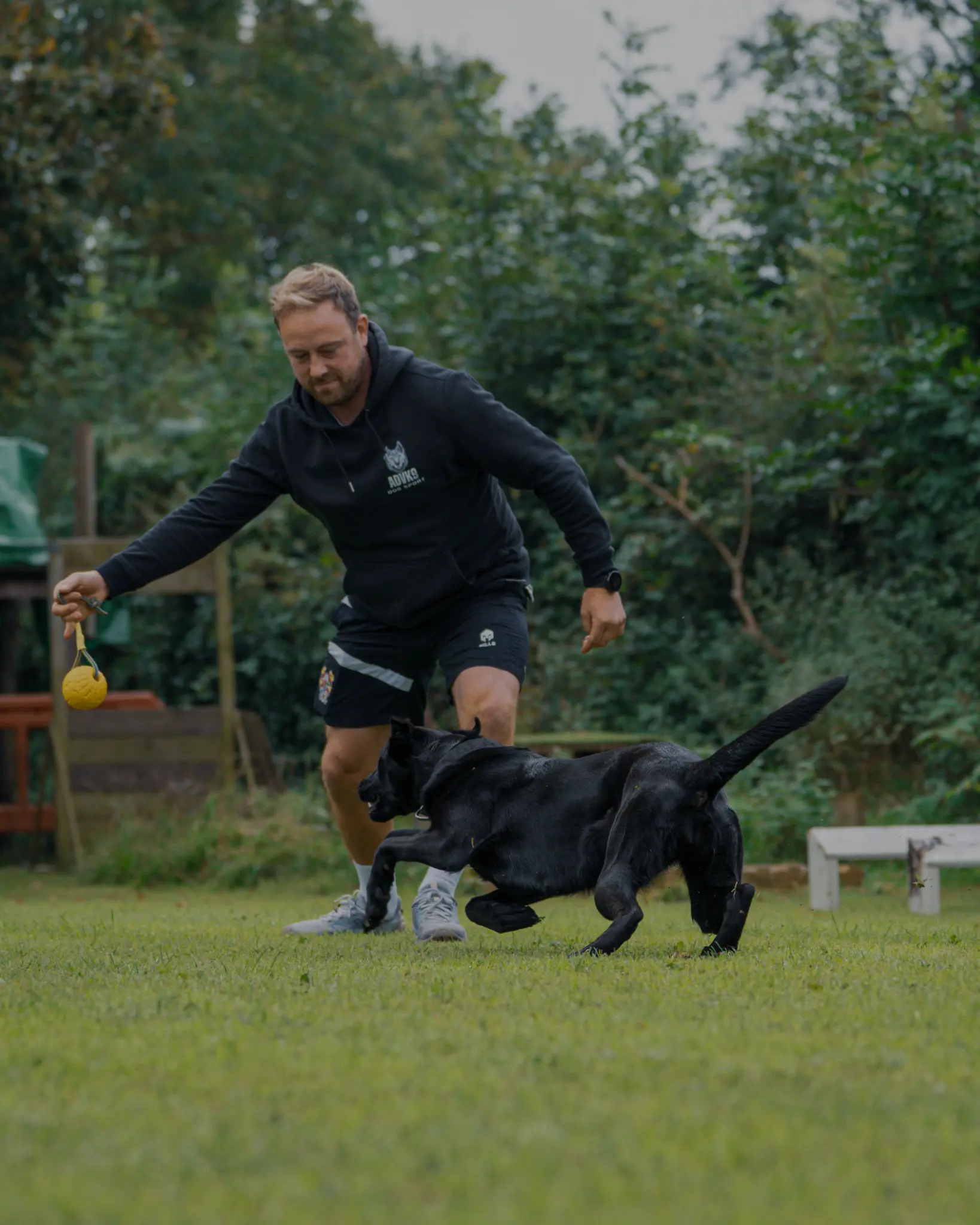
Your puppy used to keep an eye on you. Now they reach the far end of the field, find a smell and carry on as though you have said nothing. A young working dog can become much harder to call back as their interests and confidence change.
Blue Cross describes changes in recall and responses to familiar training during adolescence. Dogs vary, so the label “teenager” should not be used to explain every problem or to assume it will disappear without work.
Manage the recall you have today
If your dog is repeatedly running off, use a suitable long line attached to a well-fitting harness in an appropriate space. An enclosed area can also give you somewhere safer to practise. Follow the rules for the place you are using and keep your dog on a lead near roads and livestock.
Keep the line clear of people and obstacles, never wrap it around your hand, and prevent the dog gathering speed towards its end. If you are unsure how to handle it, ask for a demonstration. A long line is a safety measure, not something to jerk the dog back with.
Yesterday’s good recall does not make today’s unsafe situation a useful test. Manage access while you rebuild the response.
Decide what a successful return looks like
A recall needs to bring your dog close enough for you to take hold of their harness or lead safely. Turning to look at you, or racing past within a few metres, leaves part of the job unfinished.
In a quiet, secure setting, practise calling from a short distance. Reward the dog when they reach you. Separately introduce comfortable, gentle handling around the harness so being caught does not become something to dodge.
Make the reward fit the dog and the situation
Use food or play your dog genuinely values. A reward they enjoy in the kitchen may be less useful beside other dogs or fresh scent. Start where they can still engage with you, rather than taking the most exciting toy to the busiest field and hoping it will be enough.
Keep some returns separate from the end of the walk. Where it is safe, reward, then release your dog to explore again. Returning to you can be part of the outing instead of always predicting that all access ends.
Always welcome a return, even when it took longer than you wanted. Shouting at the dog once they arrive can make the next return less appealing. Dogs Trust’s recall guidance explains how to build a positive response and increase the challenge gradually.
Increase one challenge at a time
Make the next exercise only a little harder. You could increase distance in the same quiet setting, or keep the distance short while adding a mild distraction. Adding a new place, more distance and nearby dogs together makes it difficult to know what your dog can handle.
Look for a prompt turn and a complete return across several easy repetitions and outings before increasing difficulty. If the response becomes hesitant, make the next repetition easier. There is no fixed number of days that makes a young spaniel, Shepherd or Border Collie ready for every distraction.
What if your dog ignores the cue?
Avoid repeating the same word while the dog continues what they were doing. Stay calm, manage the line and collect them safely if needed. Then change the next attempt: get closer, reduce the distraction or move to an easier place.
If you are needing the line on nearly every repetition, the exercise is too difficult or the response needs more foundation work. Practise at a level where your dog can learn, rather than repeatedly rehearsing a missed recall.
A sudden change in responsiveness, especially if your dog also misses everyday sounds or seems uncomfortable, warrants veterinary advice. Fear, chasing or conflict around other dogs may need an individual behaviour assessment.
Give a working dog more than a recall test
Appropriate movement, safe exploration and activities that use your dog’s nose and brain belong in the week too. Recall practice can sit within that routine.
If your main question is why a cue works indoors but not outdoors, read the separate article on recall around outside distractions. For coaching suited to your young dog, see the current training programmes. We assess suitability and agree priorities before starting.
Owner coaching · Individual assessment
Talk through your young dog’s recall
Tell me your dog’s age, where recall changes and how you currently manage walks. I work with owners across Wirral, Cheshire and Liverpool.