
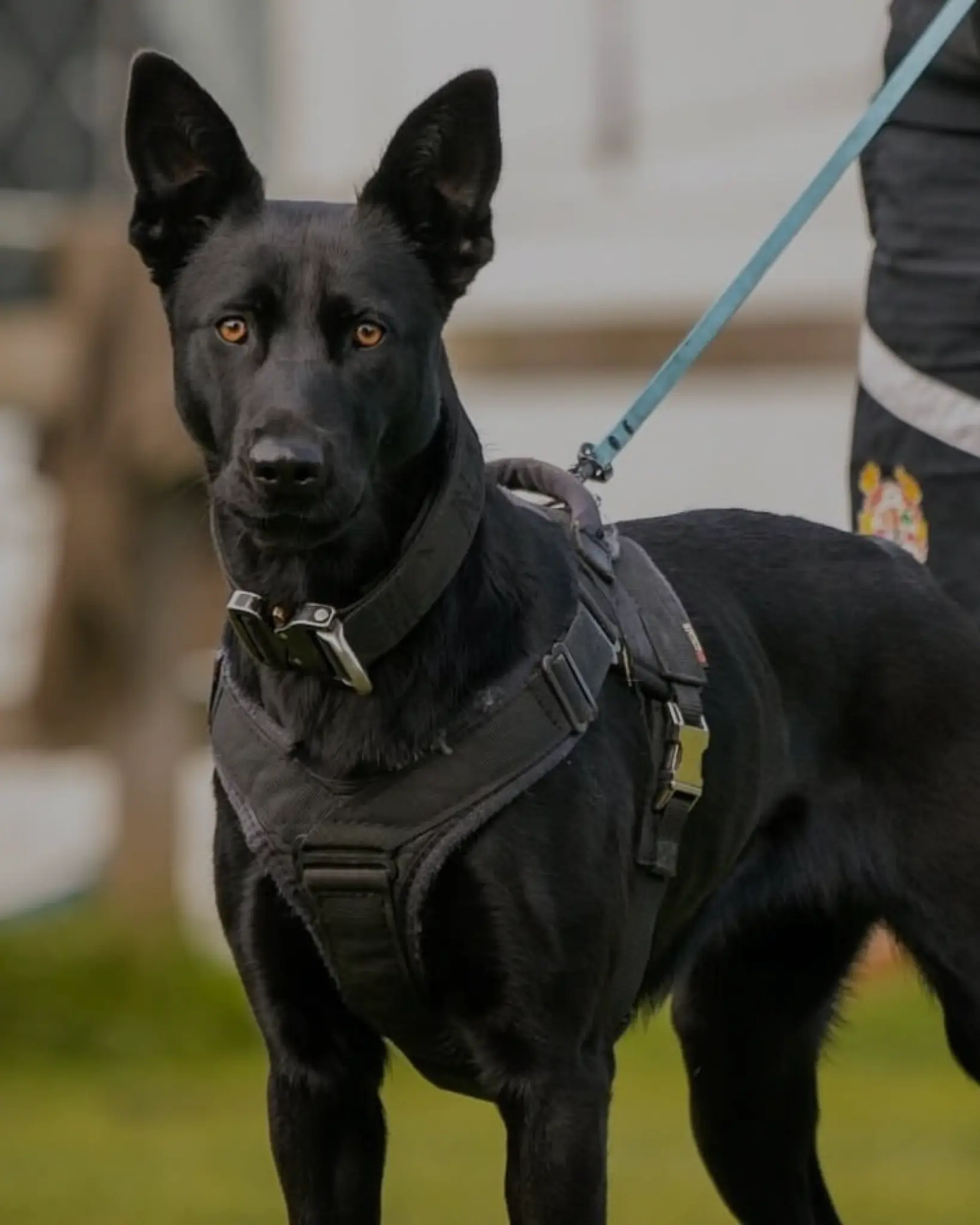
A working-breed dog who is over-excited on walks needs the walk made easier before it becomes longer or busier. When squirrels, cars or other movement trigger a fixed stare and a hard pull, use enough space for your dog to notice you and move away; do not try to train through the launch. Low frustration tolerance often shows up in the build-up, so a calmer exit and a clear distance plan are practical places to start.
Drive, excitement and frustration can overlap, but they do not explain every difficult walk. Pain, fear, a learned pulling habit and the setting can all change what you see. I would record the pattern first, then practise one small skill where the dog can still succeed.
Arousal can start before the front door
Look at the first five minutes in order: keys picked up, harness on, lead clipped, hallway, front door and pavement. Note the first change rather than waiting for the biggest reaction. It might be faster movement, a closed mouth, a fixed stare, scanning, a tight lead, ignoring food or no response to a familiar cue.
A short walk note can show what makes the job harder: the route, time, trigger, approximate distance, your dog’s early signs and what helped you leave safely. This is more useful than assuming every working-breed dog needs the same answer. A predictable daily routine for a high-energy dog can make room for rest and short training practice, but the trigger plan still needs to fit the individual dog and location.
Practise the exit before a difficult walk
Do this in a quiet part of the day, not when you need to get somewhere. The aim is a short rehearsal in which the dog can turn and move with you, not a long wait at the door.
- Rehearse a turn indoors. In a room with no outdoor distractions, say a familiar attention cue once and take a small step backwards. When your dog turns towards you, mark it quietly and give a reward beside your leg. End after a few easy repetitions rather than repeating the cue when it has been ignored.
- Add the lead and doorway in small pieces. Clip the lead on, walk a few steps towards the door, then return to the room. If the lead stays loose and your dog can still turn with you, open and close the door once and finish. If the lead tightens or your dog is already scanning, start the next attempt further from the door or go back to the indoor turn.
- Make the first outside step easy. Choose a quiet exit with room to turn back. Step out, ask for the familiar turn once, reward the response and take only a few calm steps before ending the rehearsal. Build duration later; do not make the first step a test beside a known trigger.
Forward movement can become the payoff for pulling. In a calm, safe practice area, pause or move back a couple of steps when the lead tightens, then continue when it slackens. Do not jerk the lead or tell the dog off. For the underlying position and movement skill, use the loose-lead walking basics before expecting them to work around major distractions.
Use engagement and distance before fixation takes over
Here, engagement does not mean demanding constant eye contact. It means your dog can notice you, take a reward, turn with you or move away when asked. Start where the dog can do one of those things without a tight lead. A squirrel at the far edge of a field may be workable; a squirrel directly in front of you is not the same lesson.
Watch the environment early. If you spot a trigger first, calmly turn away, choose a wider route or use a stationary visual barrier such as a parked car or fence where it is safe to do so. Keep the lead secure but as relaxed as you safely can. When your dog turns or softens after noticing the trigger, reward that choice and leave with them. Dogs Trust gives similar management advice for reactive walks, including creating distance before escalation and avoiding punishment.
For vehicle fixation, do not arrange practice beside fast traffic or use a roadside confrontation to see whether your dog can cope. Keep the dog on secure, suitable equipment around roads, choose a different route when necessary, and rehearse the indoor or quiet-route skills away from vehicles. Road safety comes before a training repetition.
Lower the task difficulty in a concrete way
Use your dog’s response as the measure. A tight lead, locked stare, refusal of food, vocalising or no response to a known cue means the current task is too hard. Do not keep asking at the same spot. Move to an earlier point on the route, add lateral distance or step behind a visual barrier, then finish with one simple success such as a turn and three loose-lead steps.
Change only one demand at a time. For example, if the park gate produces a fixed stare, the easier version might be a short walk on a quieter neighbouring street with no attempt to reach the gate. Once that is manageable, visit the same area at a quieter time, keep the same short duration and leave after one successful check-in. Do not also move closer, stay longer and add a second trigger on that walk.
This is deliberate management, not giving up. It prevents repeated rehearsals of the reaction while you build a response that can later be used in a more demanding setting. If pulling includes barking, lunging or snapping around dogs or people, the situation overlaps with lead reactivity (also called leash reactivity); give the trigger more space and use a tailored assessment rather than assuming it is simply excitement.
Common mistakes that raise the pressure
- Walking closer to a squirrel, car or dog to find the point where the dog reacts. Work before that point or leave instead.
- Repeating a cue during a fixed stare. The immediate job is distance and a safe exit, not a perfect response.
- Making every walk a training session. Keep some walks simple and choose short, planned practice windows.
- Holding a lead tight, jerking it or using a reprimand when the dog is already struggling. That can add pressure without showing the dog what to do next.
- Using a long line around traffic, close to wildlife or where the dog can hit the end at speed. A long line is not an emergency brake or a substitute for recall training.
When to pause training and get help
If a dog redirects onto hands, clothing or the lead, stop setting up more encounters. Avoid a confrontation, do not try to prise anything from the dog’s mouth or grab their collar, and create safe separation from the trigger where possible before ending the walk. Biting or repeated redirected behaviour needs veterinary and suitably qualified behavioural assessment, especially if anyone has been injured.
Speak to a vet about pain, a sudden behaviour change or distress. Significant fear, aggression or a bite history also needs specialist support; it is not something to diagnose from a busy pavement. A trainer can then help decide whether a JJ Dog Trainer programme is suitable and how owner handling should be set up.
Keep the safety net clear
Keep a dog that is not ready for wildlife or road distractions on lead. If you use a long line in an appropriate open, low-risk area, attach it to a well-fitted harness, inspect the equipment, keep hands and legs clear, avoid wrapping it around yourself and manage the slack. Gloves can be useful. Do not let a dog run full-speed into the line, and do not use it where a squirrel pursuit or road access is possible.
Teach emergency recall separately in a low-risk setting; do not test it in an emergency. No dog should be released around wildlife unless you have suitable control and permission for that access. The Royal Kennel Club likewise recommends making new places easier again and using a lead or long line as a safety net while training develops.
Further reading: Dogs Trust explains how to manage reactive behaviour on walks, including using distance and visual barriers. The RSPCA’s responsible dog-walking advice also covers control around roads and wildlife.
Questions about over-excitement on walks
Does my dog’s breed explain why they fixate on squirrels or cars?
No single label explains a behaviour. A dog may be excited by movement, frustrated by restraint, worried, uncomfortable or responding to a learned pattern. Note the early signs, the setting and the distance at which your dog stops responding, then manage the immediate safety risk rather than assuming the cause from breed or drive alone.
Should I use a long line for a dog that chases squirrels?
Use a long line only in a low-risk area with a well-fitted harness and enough space to manage slack safely. Keep it away from roads, traffic and likely wildlife pursuits, and never wrap it around your hand or body. It can provide a safety margin while teaching skills; it does not create recall or make it safe to release a dog around wildlife.
What if my dog will not take food or look at me outside?
Treat that as useful information: the task is currently too difficult. Add distance, move behind a suitable visual barrier or leave the area, then try a simpler version another time. Do not keep presenting food close to the trigger or repeat the cue until it loses meaning.
When does redirected biting need professional help?
Teeth on hands, clothing or a person are a safety concern, particularly if it is repeated or has caused injury. Stop practising around the trigger, avoid confrontation or grabbing at the dog, and obtain veterinary advice plus assessment from a suitably qualified behaviour professional. Sudden changes, signs of pain, significant fear and any bite history all raise the priority.