
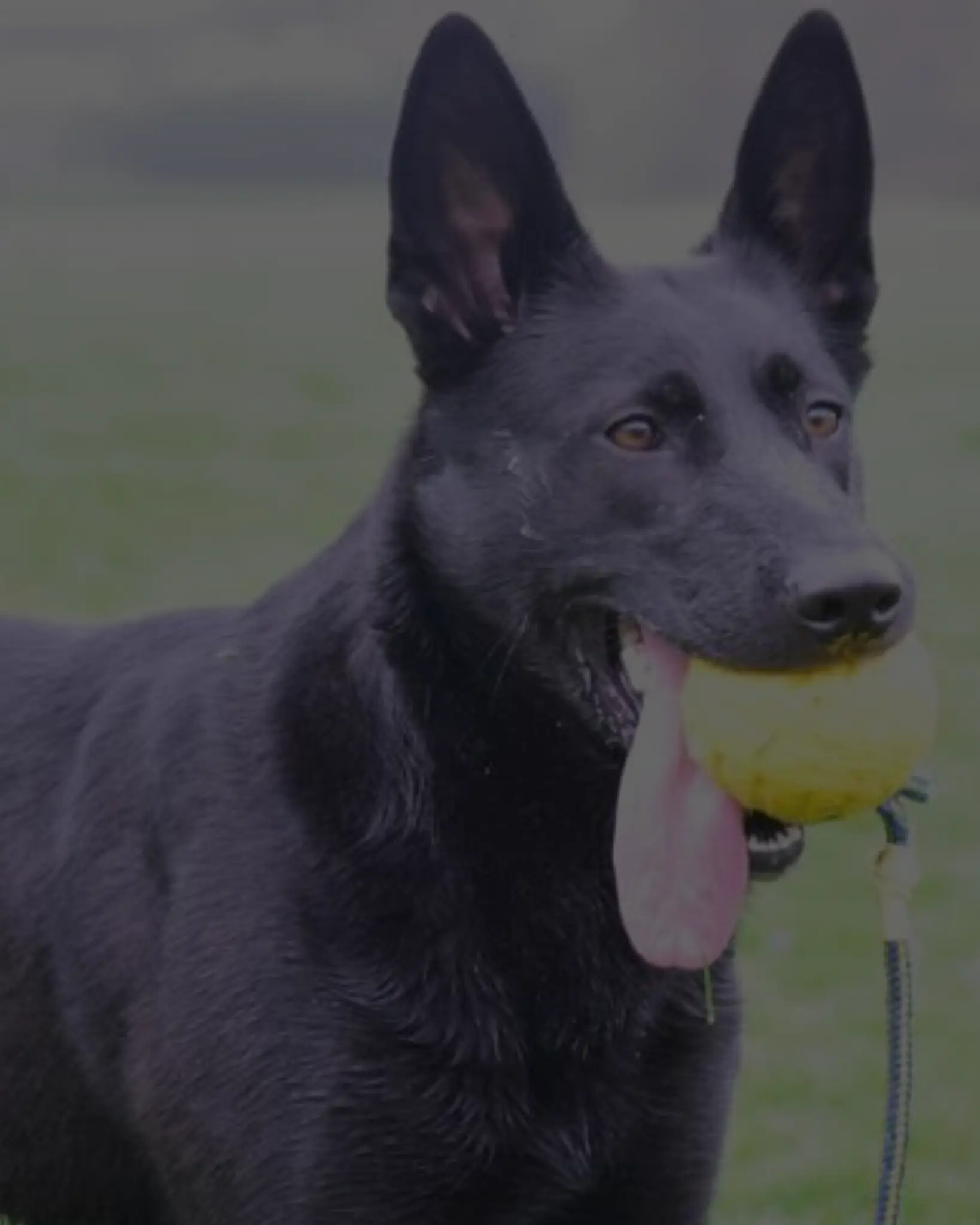
Helping a dog rest indoors starts with predictable quiet practice and a comfortable mat they can leave freely. Build the easy version before adding household movement, and look for genuine relaxation rather than stillness alone. This is the broader home foundation; if the difficulty comes specifically after a walk or game, read helping a Belgian Malinois settle after activity for a clearer transition into rest.
The aim is not to make a dog sleep on command or to contain behaviour that needs assessment. I recommend giving the dog repeated chances to choose a calm position, while you notice what helps and what makes the exercise too difficult.
Build a home off-switch on a mat
This is a home exercise, not a café or pub test. Choose a non-slip mat, bed or folded blanket that the dog can leave freely. Put it in a quiet spot away from doorways, children playing, food preparation and other pets. Pick a time when the dog has had access to water and a toilet break, and the household can be calm for a few minutes.
Use food only if your dog is comfortable taking it in that space and there is no competition with people or other animals. If food, chews or toys lead to guarding or tension, do not turn the mat into a contest; create space and get suitable professional advice instead.
- Make the mat a quiet place to choose. Sit nearby without repeatedly cueing the dog. When they look at, sniff or step onto the mat, calmly place a small treat on it. Do not push the dog onto it, hold them there or lure them into a down. At first, a dog standing quietly or looking away from you can be a useful starting point.
- Notice softer behaviour. When the dog shifts weight, lies down, lets their head rest, sighs or simply pauses without scanning for the next activity, place another treat gently on the mat. Dogs Trust advises beginning in a quiet place and rewarding progressively more relaxed choices on a blanket or mat.
- Let duration grow in very small pieces. Once the dog can lie down comfortably, wait a couple of seconds before the next quiet reward. Across several short sessions, add only a little more time. Finish while the dog is still coping; a calm release to go about their day is enough.
- Add one ordinary household change. When the quiet version is reliable, stand up, take one step, make a drink or have a helper walk through at a generous distance. If the dog gets up, stares hard or cannot settle again, do not block them or keep repeating the cue. Make the next repetition easier by reducing movement, distance or noise.
- Practise in a second room only after the first is easy. A different room, a different time of day and a busier household are all new versions of the exercise. Change one variable at a time so the dog has a fair chance to understand the task.
A lead, tether, crate or closed door should not be used to make a dog stay on the mat. The value of this routine is that the dog is learning to settle with the option to move away. Some dogs need a quiet transition after activity before they can rest; give them that space rather than trying to make the first session a test of endurance.
Record whether the dog is actually relaxing
A brief record makes the pattern clearer than relying on a difficult evening from memory. Keep it factual. A dog does not have to be asleep for the session to count, and one restless day does not erase earlier progress.
- Write down the date, room, time of day and what happened in the half-hour beforehand.
- Note the first quiet behaviour you saw, such as standing quietly, sniffing the mat, lying down, shifting onto one hip or resting the head.
- Time the gap from putting the mat down to that first quiet behaviour, then the longest calm stretch before the dog chose to get up.
- Record interruptions plainly: a delivery, a person entering, a noise outside, another pet or repeated scanning. This helps you adjust the set-up instead of blaming the dog.
- Review a handful of similar sessions. Look for a shorter time to settle, longer comfortable pauses or an ability to cope with one small household movement, rather than comparing the dog with another dog.
If the concern appears when the dog is left alone, a stationary camera can be useful during an ordinary, necessary absence. The RSPCA recommends occasional video checks because pacing, trembling or whining can be missed by owners. Do not extend an absence or stage distress just to collect footage. A short note of departure cues, timing and observable behaviour gives a vet or behaviour professional more useful information than a dramatic retelling.
Common mistakes that make settling harder
Asking for too much too soon. A mat beside a busy kitchen, during visitors or while someone is preparing to leave may be far beyond the dog’s current level. Start where the dog can succeed, then make one manageable change.
Turning the mat into an obedience battle. Repeating a cue, physically returning the dog to the bed or using restraint can make the area less comfortable. If the dog walks away, use that information: the step was too hard, the environment was too busy or the dog needs something else first.
Changing duration, movement and distraction together. Keep only one progression at a time. For example, build a few more seconds in the same quiet room before practising while you stand up.
Assuming more activity is the whole answer. Exercise, training, rest and the home environment all belong in a dog’s day, but individual dogs recover and cope differently. Repetitive behaviour has more than one possible cause; do not label pacing or shadow chasing as boredom by default.
Using confinement as treatment for panic. A crate may be a familiar resting place for some dogs, but it is not a treatment for separation distress or frantic behaviour. Do not use a stronger crate, restraint or a closed door to force a dog through fear.
When a mat routine is not the right next step
Pause the exercise and speak to a vet if the inability to settle is sudden, markedly worse, linked with signs of pain or illness, or involves persistent pacing. Repeated light or shadow chasing also needs veterinary assessment before treating it as a training issue; veterinary guidance notes that medical and neurological causes may need to be ruled out.
Separation-related distress needs its own plan. If the behaviour starts as you pick up keys or put on shoes, or the dog paces, vocalises, soils, drools, destroys exits or cannot settle when left, contact your vet. The vet can advise on next steps and, where appropriate, referral to a suitably qualified behaviour professional. Do not leave the dog long enough to panic in the hope that they will get used to it.
For fear, aggression, a bite history, redirected biting or resource guarding, prioritise safe separation without confrontation. Give people space from the dog and do not reach in, prise an item away or physically restrain the dog. Veterinary and qualified behavioural assessment is more appropriate than practising a mat routine around a risky trigger.
For the gradual mat method, read Dogs Trust’s settle-training guidance. For concerns during time alone, the RSPCA guide to dogs left alone explains why video checks and veterinary advice can matter.
Questions about a dog settling at home
How long should mat training take?
There is no fixed timetable. Begin with a few easy, quiet repetitions and progress only when the dog can lie down or pause comfortably. A dog that gets up, scans or becomes agitated is giving useful feedback that the step should be shortened or simplified.
Should I keep my dog on the mat when they get up?
No. Do not physically return or restrain them. End the repetition, consider what changed around the dog, and make the next attempt easier. The routine is for practising a voluntary rest choice, not for making the dog remain in one place.
How can I tell whether the dog is resting rather than waiting for a reward?
Write down observable behaviour rather than trying to read the dog’s mind. A head resting, a comfortable weight shift, a quieter body and longer pauses between checking the room can be useful signs to track. The pattern across several comparable sessions is more useful than one moment.
Can I use this routine for a dog who becomes upset when left alone?
A calm mat foundation with you present may be part of ordinary training, but it does not treat separation distress on its own. If the problem appears around departure or during absence, avoid testing the dog with longer periods alone and ask a vet about appropriate assessment and support.
When can I practise the settle somewhere public?
Wait until the dog can relax reliably at home with ordinary movement around them. A café or pub adds people, noise, smells and close proximity, so it needs separate, carefully planned progression. See the related guide below when the home foundation is established.