
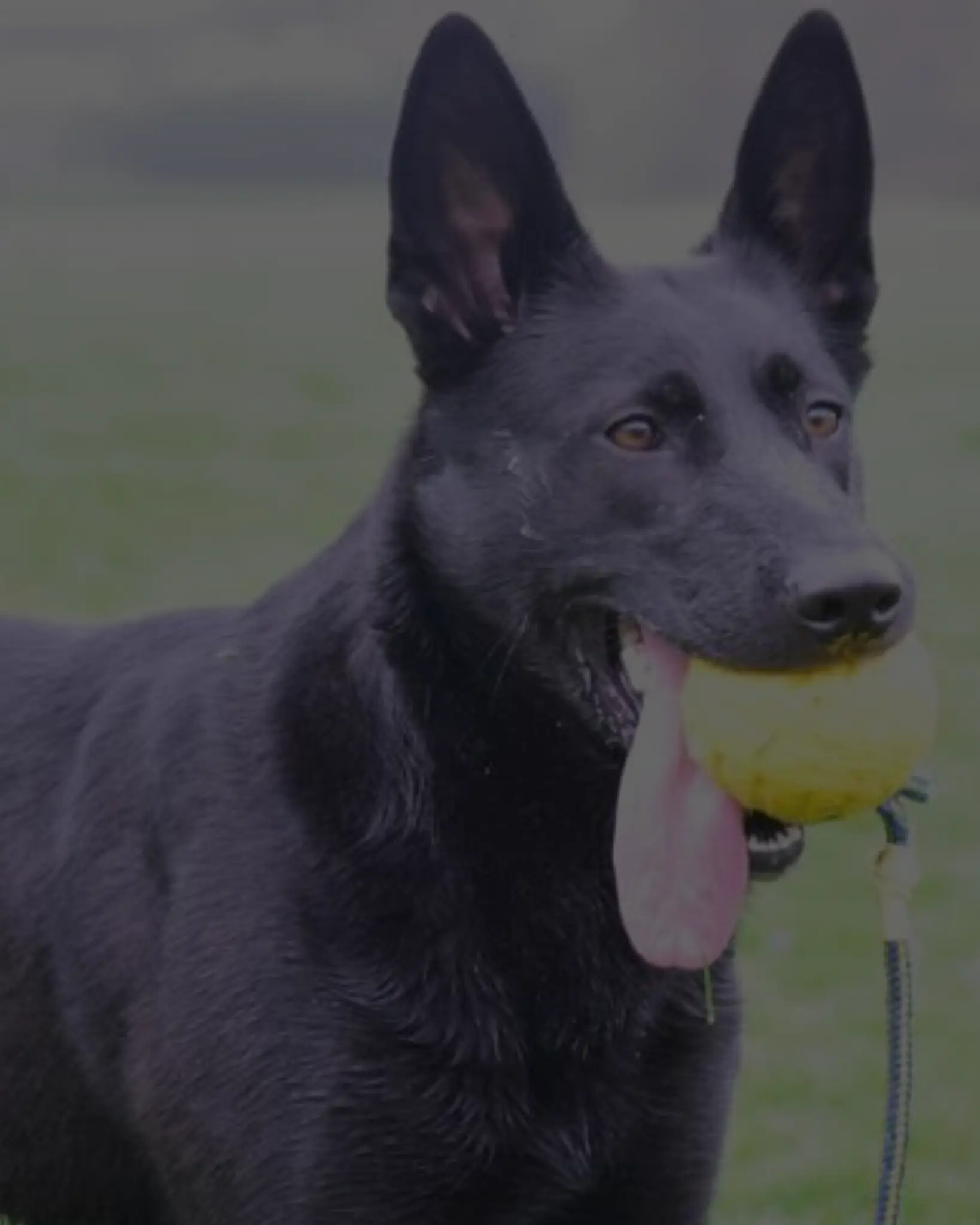
A working-breed dog can learn to settle in a café or pub, but the first visit should be an easy practice session, not a test of endurance. Prepare the same portable mat in quiet places first, choose a calm venue with a clear way out, and leave while your dog is still coping.
The aim is not simply to keep a dog in a down beside a table. A public settle means the dog can rest comfortably enough to take in ordinary movement without continually pulling, scanning or needing you to repeat a cue.
A café settle is different from a home settle
A home settle is a useful foundation, but a café adds close foot traffic, food smells, chairs scraping, strangers, other dogs and less space to move away. Treat the new setting as a new version of the exercise. Do not assume that a dog who can lie down in the kitchen can immediately manage a busy room.
Stillness alone is not the measure. A dog may remain on a mat because they have been told to stay, while their body is tight, their eyes are fixed on every movement or they are trying to make themselves small. Look for softer, more comfortable behaviour over time: a change of hip, a sigh, a resting head, or an ability to disengage from what is happening. Dogs Trust similarly advises building from a quiet place, then rewarding increasingly relaxed behaviour before adding distraction.
Watch the whole dog rather than one signal. A lowered head, ears back, turning away, lip licking or yawning can be signs that a dog is worried; the RSPCA illustrates these signals in context. If your dog looks uncomfortable, do not hold them in place to prove they can cope. Create distance or leave, and make the next practice easier.
Prepare a portable mat before you go
Use one mat, blanket or bed that is large enough for your dog to lie on comfortably, has a non-slip side and is easy to carry and clean. It is a location cue, not a restraint. Start in a quiet room with the mat in the same place and a release word that ends the exercise.
- Make the mat worthwhile. Sit nearby with the lead loose if one is needed. Place small rewards on the mat for choosing it, standing calmly, sniffing it or looking away from you. There is no need to rush to a down.
- Reward relaxation, not just obedience. When your dog lies down, begin to wait for a softer body, a weight shift or a head rest before quietly placing the next reward on the mat. Build the gap between rewards in small increments across several sessions.
- Add normal life one piece at a time. Stand up, sit at the kitchen table, open a door, or have a helper walk through at a comfortable distance. If your dog cannot settle again, reduce the movement, distance or duration rather than repeating the cue.
- Practise the travel version. Take the same mat to a quiet garden, empty bench or calm outdoor spot. Set it down, sit for a brief spell, release your dog and leave. This teaches that the mat still has meaning away from the living room.
A chew or toy may help some dogs at home, but do not rely on one as the answer in a crowded venue. Food, dropped items and a valuable chew can complicate a close public space, especially if another dog or a child approaches. Keep rewards discreet and manage the space instead.
Make the first café or pub visit easy to leave
Pick a dog-friendly venue at a quiet time, ideally with outdoor or spacious seating and no event, queue or busy entrance beside you. Check the venue's dog policy before travelling. A table near a wall or an outer edge can reduce people passing on both sides, provided your dog is not wedged into a corner and can move away with you if needed.
Choose a table away from the door, bar, till, toilets, service route and any other dogs. Sit so you can stand up and leave without asking people to move. For a first visit, going in, settling briefly and leaving is enough. The length is set by your dog's comfort, not by finishing a meal or making the outing feel worthwhile.
Use familiar, well-fitted walking equipment and keep the lead clear of chair legs and people’s feet. It should be short enough that your dog cannot step into an aisle or greet another dog, but not held tight while they lie down. Do not wrap the lead around your hand, furniture or chair; that can create a trip hazard or turn a sudden movement into a problem. Calm, loose-lead handling is worth teaching separately before expecting it in a tight public space.
Build the public progression, not the longest stay
Change only one part of the picture at a time: location, proximity to people, sound, duration or activity. Repeat an easy level on more than one occasion before adding the next challenge. If a weekday outdoor table goes well, the next step might be the same venue with a little more movement, not a packed Saturday evening indoors.
Keep the arrival simple. Walk to the table, place the mat, give your dog room to investigate it, then settle yourself. Avoid inviting strangers to greet your dog during practice. If someone wants to say hello, a polite “not today, we’re training” protects the session and gives your dog a predictable job.
Do not try to solve a difficult visit with repeated commands, lead pressure or a constant stream of food. Those responses can keep a dog focused on the conflict around the table. Dogs Trust’s loose-lead guidance recommends practising first where distraction is lower and avoiding lead jerks; use that easier stage to improve handling, then try public space again.
Leave before your dog needs to escape
End the visit when your dog has had a calm, manageable experience. Leave immediately if they cannot return to the mat, are repeatedly pulling towards people or dogs, are scanning without a break, stiffen, retreat, vocalise, or show worried body language. Take your dog with you; do not ask them to remain while they are fearful.
A quiet exit is information, not failure. Note what made the session hard—how close the traffic was, how long you stayed, whether another dog arrived—and lower one of those demands next time. If fear, aggression, a bite history, suspected pain or a sudden behaviour change is part of the picture, seek veterinary advice and suitably qualified behaviour support before using cafés or pubs as training practice.
Common mistakes when practising a public settle
- Starting with the busiest venue. A calm outdoor table at an off-peak time gives you room to observe and leave. Build to more difficult places rather than beginning there.
- Measuring success by duration alone. A short visit with relaxed recovery is more useful than a long visit where the dog is only enduring the setting.
- Putting the mat in a pinch point. Do not place your dog in an aisle, beside a doorway or where staff and other dogs must pass close by.
- Confusing a stay with comfort. A cue can hold position, but it does not make a worried dog feel safe. Read the dog, reduce the demand and leave when needed.
For the home foundation behind this exercise, read how to help a working-breed dog settle at home. A predictable day can also make planned public practice easier; see a daily routine for a high-energy dog.
Further reading: Dogs Trust’s guide to settle training and the RSPCA guide to dog body language.
Questions about settling in cafés and pubs
How long should a first café or pub visit be?
Keep it brief enough that your dog remains comfortable and you can leave easily. There is no useful fixed number of minutes: a calm, short visit is a better starting point than staying until your dog is overloaded.
Should I keep telling my dog to stay on the mat?
Use the mat cue to begin the exercise, then give your dog a chance to settle. Repeated cues usually mean the stage is too difficult. Make the setting easier or leave rather than turning the visit into a long argument about position.
My dog gets excited when people want to say hello. What should I do?
Choose quieter times and ask people not to greet your dog during early practice. Create more distance from passing people and reward calm disengagement. Add greetings later only if your dog can remain composed and you can manage the space safely.
Can a fearful dog learn to settle in a pub?
Do not force a fearful dog to remain in a café or pub. Start with a vet if there is a sudden change or suspected pain, and use suitably qualified behaviour support where fear, aggression or a bite history is involved. Public venues may not be an appropriate training setting at that stage.
Where should the lead go while my dog is under the table?
Keep it on familiar, well-fitted walking equipment and managed so it cannot cross an aisle, wrap around furniture or trap someone’s feet. Pick a table position that lets you keep the lead clear and leave promptly; do not tether your dog to a chair or table.