
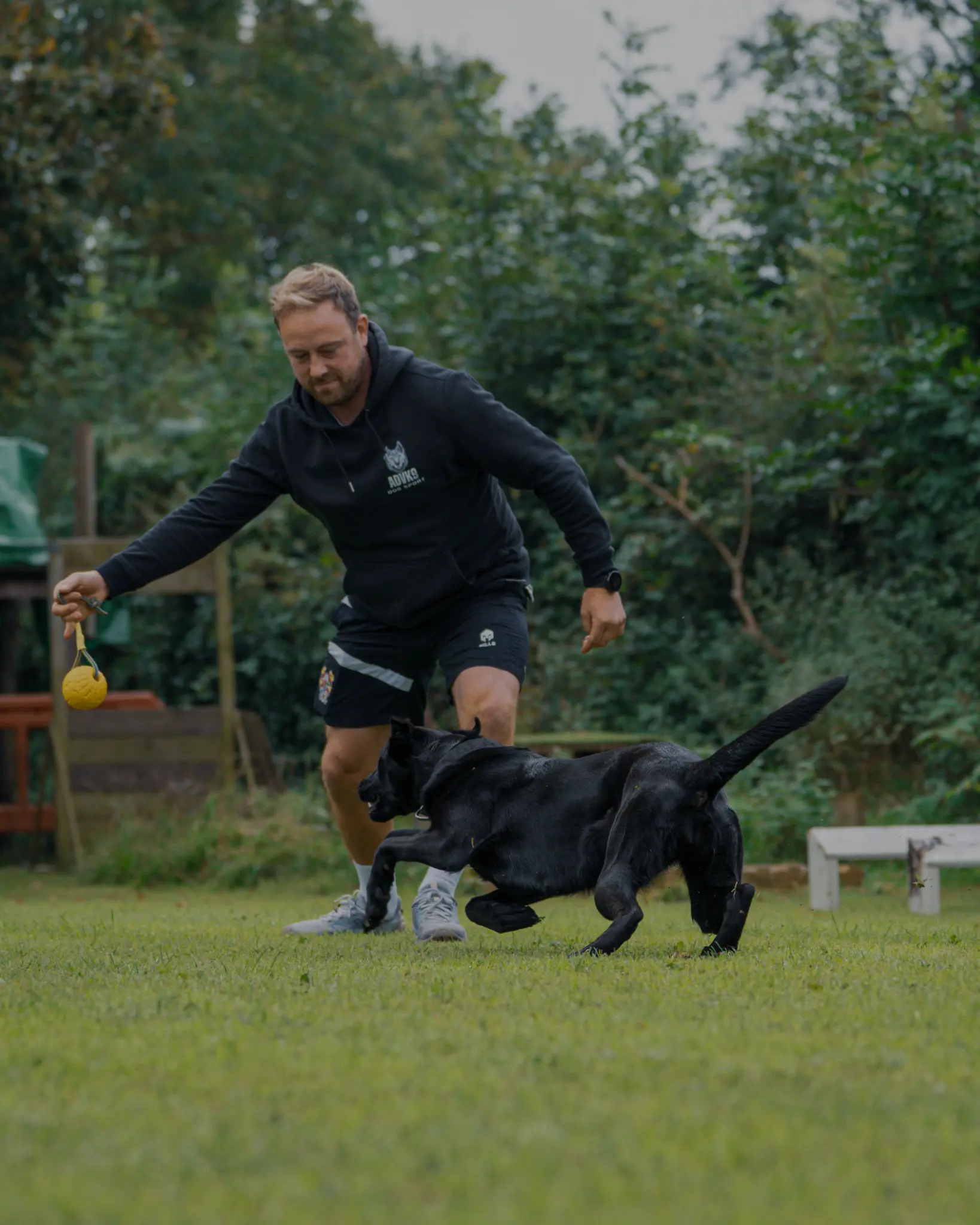
A long morning walk does not organise the rest of your dog’s day. There is still the time while you work, the rush when everyone gets home, and the evening when you would quite like to sit down.
For a high-energy dog, a useful daily routine includes suitable physical activity, something to think about, contact with people and undisturbed rest. The amount of each depends on the individual. A young working Cocker, an adult Border Collie and a German Shepherd recovering from an injury should not be given the same timetable.
Plan for needs, not a mileage target
Start with your dog’s age, health, fitness and what they enjoy. PDSA’s exercise guidance explains why those factors change how much activity is appropriate. Ask your vet if you are unsure, particularly with a growing dog or a change in comfort or stamina.
Then look at what the walk contains. A route can include time to sniff, a short stretch of loose-lead practice and a few straightforward recalls in a safe setting. Those are different experiences from being marched around the same circuit or chasing a ball throughout the outing.
A daily structure you can adapt
This is an example of how to arrange the day, not a prescription for exercise duration or a rule about feeding times. Keep your dog’s usual dietary and veterinary advice in place.
- Morning: allow a toilet break and an appropriate walk with time to explore. Practise one useful skill, such as walking past the gate on a loose lead. Finish with a familiar, quiet period rather than immediately starting another exciting activity.
- During the day: make arrangements for toilet breaks, company and activity that suit your dog. If your work means you cannot provide these, arrange suitable help. A food puzzle does not replace someone meeting the dog’s needs.
- Later afternoon or evening: include another suitable opportunity for movement or exploration. Add a short training session or an easy search game if it fits what your dog needs that day. You do not have to cover every training goal in one session.
- Before bed: keep the final part of the day predictable, with a toilet opportunity and a comfortable place to rest. Avoid repeatedly restarting play when your dog is already settling.
Give training a small, specific job
“Do some training” is easy to put off. “Practise a few loose-lead steps before we reach the pavement” gives you a clear task.
Pick a skill that would make an ordinary part of your day easier. That might be waiting while you open the car, returning from a short distance, or going to a mat while you prepare food. Start where your dog can manage it, reward the response you want and stop before the session becomes a struggle.
For activities you can do at home, see mental stimulation for working breeds. Use them alongside appropriate walks, not as a reason to remove outdoor activity.
Protect rest without ignoring a problem
Choose somewhere your dog can rest without constant interruptions from people, other pets or activity at the window. Give them a chance to finish resting before offering the next game.
Restlessness deserves attention if your dog cannot get comfortable, pants when they have not been exercising, or has a sudden change in behaviour. Speak to your vet rather than assuming they need a harder workout. Distress when left alone also needs its own assessment; leaving more toys is not a complete plan.
Check whether the routine is helping
Notice ordinary details: can your dog eat, engage with you outside and rest between activities? Are evenings manageable, or does every return home begin another round of frantic activity?
Change one part of the routine at a time so you can see what happened. If walks already involve repeated barking or lunging, choose manageable places and get individual help. Adding distance to a walk that your dog finds difficult may add more difficulty.
If the main problem is what happens after you get home, the separate article on high-drive dogs that struggle to settle indoors will help you describe that pattern.
Support with your dog’s daily management
A workable plan needs to fit your household as well as your dog. The training programmes start with suitability and agreed priorities. A routine, lead work and owner handling can be discussed together, without promising that one schedule will suit every working breed.
Owner coaching · Individual assessment
Talk through the day your dog actually lives
Tell me about your working hours, walks and the parts of the day you find difficult. I work with owners across Wirral, Cheshire and Liverpool.