
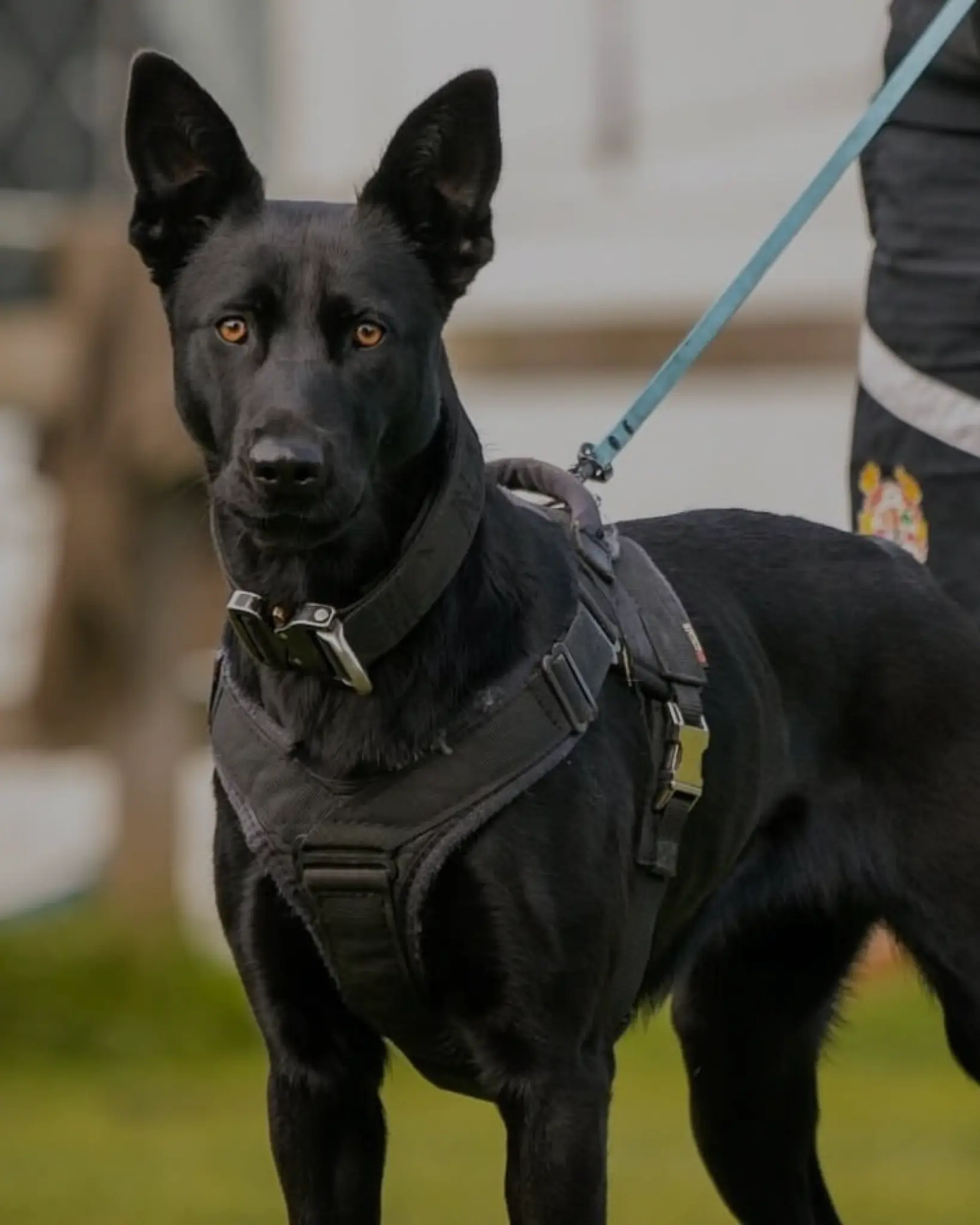
A working-breed dog does not need to greet every person who comes through the front door. The immediate job is to make the arrival safe and predictable: get the dog away from the doorway before it opens, let the visitor settle, and make calm behaviour easier than racing the hall.
Build the routine with planned, quiet rehearsals rather than using a real visitor as a surprise test. A dog who is loose, able to turn away and comfortable behind a familiar barrier may later choose a brief greeting. A dog who is frantic, frightened or confrontational needs more space, not a forced introduction.
Why arrivals get so big, so quickly
The trigger is often a sequence rather than the person alone: footsteps outside, a knock, the door opening, voices in the hall and someone leaning down to say hello. Arousal is the dog’s level of activation. When it rises quickly, a familiar cue can become hard for the dog to use and a bouncy dog can turn into a charging, barking one in seconds.
Each full-speed dash to the front door is also practice. If it repeatedly ends with access to the hallway, attention or a visitor moving away, the arrival rush can become the dog’s default response. That does not tell you why the dog is doing it, but it does tell you what to prevent while you teach a different routine.
Do not assume that every loud greeting is friendly excitement. Loose movement and an ability to disengage are different from a stiff body, hard stare, avoidance, tucked posture, growling, lunging or snapping. The latter signs can reflect fear, guarding or aggression as well as over-arousal. Treat them as a safety issue, not a manners problem.
Set up the arrival before the door opens
Tell expected visitors the plan in advance: text or call on arrival instead of knocking, wait while you put the dog away, then come in and settle. Ask them not to call the dog, reach over them, stare or offer a greeting at the doorway. The visitor is there to visit you; the dog does not need to be part of the first minute.
Use a room, stairgate or pen only if it is already a familiar, comfortable place for your dog. Set it up away from the front-door traffic and make sure it is secure. A barrier is management, not a lesson in itself. If your dog becomes more frantic, throws themselves at it, barks continuously or redirects frustration onto a person, do not keep them there hoping they will get used to it. Use greater separation in a comfortable area and get suitable advice for the underlying problem.
If toddlers or visiting children are involved, make physical separation the default while people arrive. An adult should actively supervise any shared space. Children should not be asked to hold a lead, give cues, greet the dog first or persuade a dog to come closer. Put away the dog’s valued food, chews and toys before the visit if these create tension.
Exercise 1: teach an arrival station without a visitor
Practise this on ordinary days, not when you need to answer the door. Use a bed or mat the dog already likes, placed well away from the hallway. The aim is a voluntary move to a quiet station, not pinning the dog in place.
- Start below the real trigger. Make one small arrival-like sound, such as a quiet tap on a table or a phone notification. If your dog can stay soft and turn towards the bed, calmly reward there. If the sound sends them running to the door, make it quieter or practise farther away.
- Build one link at a time. When the easy sound is unremarkable, add one change: walk towards the hall, touch the door handle or open an internal door. Reward quiet choices on the station, such as orienting away from the hall, sniffing, lying down or resting the head. Do not repeat a cue or physically return the dog to the bed.
- Stop while it is still easy. A few clean repetitions are enough. If the dog leaves the station, starts scanning or cannot settle again, end that version and make the next one simpler. Do not add the knock, open door and a person all in the same session.
This builds on the quiet-rest foundation in our guide to helping a working-breed dog settle at home, but the goal here is specific: the sound of an arrival predicts moving away from the doorway, not launching towards it.
Exercise 2: one planned visitor, with a clear exit
Choose a calm adult who will follow the plan. Do not start with a delivery, a busy gathering or a child who wants to meet the dog. Arrange a message before the person comes to the door so you can set the dog up before the arrival begins.
- Manage first. Put the dog in their familiar room or behind their comfortable barrier with a calm activity only if that activity is safe for that dog. The visitor comes in, closes the door and sits down. There is no greeting attempt yet.
- Read the dog before changing anything. If the dog can settle, move away from the barrier, respond to a familiar easy cue or take a short pause from watching the visitor, you may continue with separation in place. If they bark, lunge, pace, fixate, stop taking food or become more worked up, that is the exit decision: keep them separate and finish the visit without a greeting.
- Make greeting optional and short. Only consider opening the barrier when the dog is genuinely coping and the visitor can stay still and neutral. Let the dog choose whether to approach, then call them away for a break before the energy climbs again. If the dog cannot move away, do not create a closer interaction.
A useful early success may simply be the dog hearing the arrival, going to their space and remaining comfortable while someone enters. Later progress might be less staring at the gate, a faster return to the bed after the door closes, or a calm decision to approach and then walk away. Keep a short note of the set-up and the first point at which the dog became unsettled. There is no universal distance or duration that proves a dog is ready for the next step.
Barrier frustration: when containment adds pressure
A gate can prevent a dangerous dash, but it can also leave a dog close enough to see a person while unable to move away or investigate. That frustration can show up as barking, lunging at the barrier or redirected behaviour towards the handler. Do not lean over the gate, push the dog back, grab their collar or hold them in the doorway during escalation.
Instead, increase the distance from the visitor, block the view if that helps and use a room the dog knows how to settle in. If closed-door or crate time causes distress, a crate is not the answer to panic. Revisit the separation routine at a much easier time, or seek veterinary and qualified behavioural support rather than making the confinement stronger.
Common mistakes at the front door
- Opening the door to see whether the dog has improved. A real arrival should follow the easiest version of the plan, not become an unprepared test.
- Making the visitor the reward. Do not release an over-aroused dog straight to a person in the hope that the excitement will burn off. A greeting is optional, and it comes after calm handling, not before it.
- Holding the dog tightly at the threshold. Restraint, collar grabs and confrontations can add pressure and leave hands close to an escalated dog. Create separation before the door opens instead.
- Using a gate that the dog cannot cope behind. If the dog becomes frantic at the barrier, change the management; do not keep repeating the same hard picture.
- Allowing children to turn the greeting into a game. Running, squealing, hugging, chasing and reaching into the dog’s resting space can raise risk. Adults manage the set-up and separate when active supervision is not possible.
For the broader pattern of arousal and early signs, see why some working-breed dogs get over-excited on walks. The setting is different, but noticing the build-up early and making one part of the task easier still matters.
When to stop visitor practice and get help
Do not work through barking, lunging, snarling, snapping, biting or clear distress around visitors. Put safe separation in place before the door is opened, avoid more visitor set-ups for now and arrange appropriate veterinary and qualified behavioural assessment. Seek veterinary advice promptly for a sudden change, pain concerns or behaviour that is worsening.
Do not force a worried dog to meet a guest, restrain or confront them to make the greeting happen, or use a visitor to test their tolerance. If anyone has been bitten or injured, prioritise immediate safety and the appropriate medical care as well as professional advice.
Further reading: Dogs Trust explains how to prepare a dog for visitors, including gradual work with knocks and a bed routine. For a dog showing aggression towards visitors, read its guidance on safe management and behavioural support.
Questions about dogs and visitors at home
My dog reacts before the visitor comes in. Where should I start?
Start with the earliest safe part of the sequence, often a very quiet knock-like sound or the movement towards the hallway. Practise it without an actual visitor, then increase only one detail when the dog can stay calm. On real visits, use a message or call so you can separate the dog before the door opens.
Should visitors ignore my dog?
At the start, yes: no calling, reaching, staring or trying to make friends at the doorway. Once the visitor is seated and the dog is coping, a greeting is still optional. Let the dog choose to approach and make it brief; they should always be able to move away again.
Can I use a baby gate or crate when people visit?
A familiar, comfortable gate or room can safely prevent access to the front door. It should not be a place where the dog becomes frantic or panics. A crate can be a resting place for a dog who is already happy there, but it does not treat distress or make a risky visitor interaction safe.
When is this more than an excitable greeting?
Take it seriously if the dog freezes, stares hard, tries to get away, growls, lunges, snaps, bites or cannot calm once the visitor is settled. Keep people safely separate from the dog and seek veterinary advice plus assessment from a suitably qualified behaviour professional rather than trying to train through the next visit.