
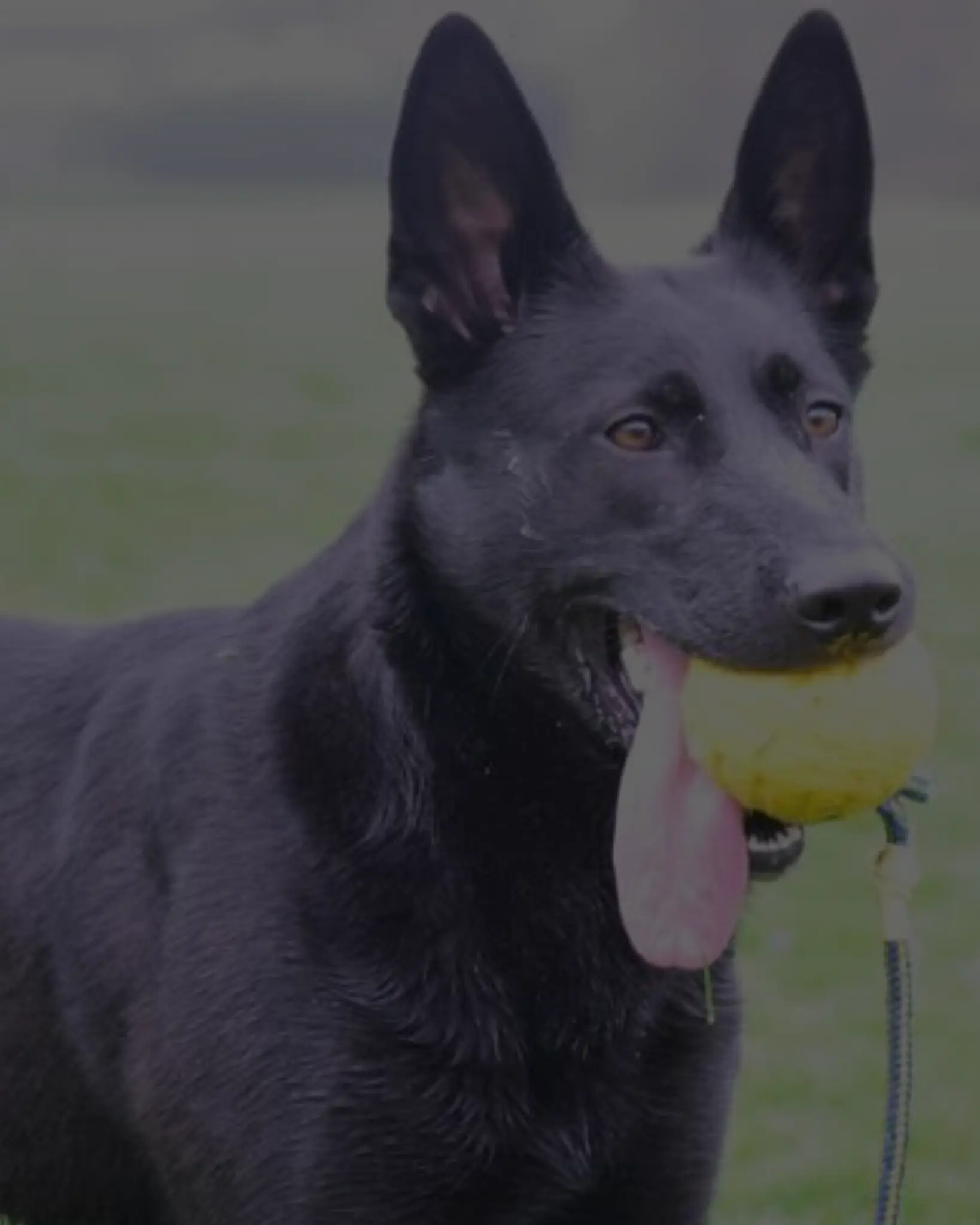
If a working-breed dog gets overstimulated by play, do not extend the game in an effort to take the edge off. Make the next game quieter and shorter, finish while your dog can still respond to an easy cue, then give them a clear route back to ordinary life. Play is not inherently a problem; the useful question is whether this dog can recover from this version of play in this setting.
Arousal is the dog’s level of activation. A little can make a game enjoyable and focused. Too much can show up as frantic movement, a shrinking ability to listen, or difficulty leaving the toy behind. Recovery is the return from that state: the dog can move away from the game, take in their surroundings and choose a normal quiet activity without being repeatedly managed.
Read the build-up before the game tips over
Do not wait for one dramatic moment. Look for a pattern across the game and the few minutes after it. Your dog may be getting close to their limit when play becomes faster but less organised, a familiar cue takes longer to land, they fixate on the toy between turns, or their mouth starts travelling towards hands, sleeves or the lead instead of the toy.
- During play: watch for harder grabbing, louder vocalising, bouncing into you, missed releases or a dog who cannot pause for a simple, familiar response.
- At the end: notice whether the dog can leave the toy area, orient back to you or their surroundings, and gradually choose a normal activity.
- Across sessions: note what came before the difficult game: visitors, a busy walk, another dog, a hot day, poor rest, a faster toy or a longer session.
None of those observations diagnoses the cause on its own. Some dogs can look busy because they are worried or uncomfortable, not because they need more play. Dogs Trust also notes that apparent excitement can sit alongside stress signs, and that behaviour or rest changes can justify a veterinary conversation. Its guidance on hyperactivity and restlessness is useful background.
Keep a brief note of the game, the setting and how recovery looked. This makes it easier to spot a workable change. In training, rehearsal simply means repeating a pattern. If every game runs until your dog is grabbing at clothing and cannot disengage, that is the pattern they keep practising. Cornell’s veterinary guidance likewise recommends identifying the situations that trigger an over-reaction and avoiding repeated exposure while a plan is being built.
Make play fit your dog’s current capacity
Change one part of the game at a time. You might reduce the toy’s speed, use fewer turns, play in a quieter space, keep people and dogs out of the area, or choose a lower-key activity that day. Individual dogs differ in what they enjoy and how much excitement they can recover from; breed type alone cannot answer that for you.
Choose secure footing and enough room to avoid collisions. Keep a toy at a reachable height, rather than encouraging jumps or a risky high-speed pursuit. Blue Cross advises beginning tug gently because a game that is too exciting can make it harder for a dog to concentrate; it also cautions against repetitive retrieval with sharp turns and sudden stops. Read its safe-play guidance before changing the game.
Give the end of play its own meaning
Use different words for different jobs. A release cue asks the dog to let go of the toy for one turn. A separate permission cue starts another turn. A quiet finish word, such as finished, means the whole game is over and the toy will go away. This stops one word having to mean both “let go” and “launch back into play”.
Do not try to teach a release cue for the first time when the dog is already overflowing. Build that skill in calm exchanges first. Our guide to a voluntary out cue and tug reward covers that separate foundation. Here, the aim is to use an already understood release and an unremarkable finish before arousal rises.
Practise a shorter game with a clear finish
Use this exercise only with a dog who has normal, safe toy exchanges. Pick a low-pressure time, not just after a demanding walk, visitors arriving or another hectic game. Work in a quiet, uncluttered area with sound equipment and no one likely to crowd the dog.
- Set a small target. Plan one gentle turn of play and one calm finish. Start with the toy movement your dog can handle without launching, jumping or losing track of you. A few seconds can be enough when you are testing a new pattern.
- Keep the middle uncomplicated. Do not add a new obedience exercise, faster movement or a second toy. Let the dog enjoy the one brief game, then make the toy still before their behaviour changes.
- Use the known release once. If your dog already has a reliable release cue, give it once. When they release, use the finish word once and put the toy away without drama. If the release is not yet reliable, do not turn this session into a test; return to calm exchange training another time.
- Make recovery easy to choose. Let ordinary life become less interesting for a moment. Give your dog access to their usual comfortable resting area or a quiet space they already choose. Do not repeatedly cue a down, lure them into a crate or start another exciting activity to fill the gap.
- Observe, then stop. For this first practice, one clean finish is the whole lesson. On a later calm occasion, repeat the same simple picture before making any part harder.
A successful first finish can be modest: your dog releases without a struggle, you can put the toy away, and they can move away from the play spot without following, grabbing or being called repeatedly. They do not have to lie down instantly. Walking off to sniff, taking a drink, looking around or choosing their bed can all show a dog coming back to normal.
End earlier next time if you see a missed familiar cue, body contact that becomes more forceful, escalating noise, mounting fixation on the toy or slower recovery after the last turn. The useful adjustment is usually a smaller, easier picture, not more repetitions to prove the dog can cope. Dogs Trust’s settle-training advice uses the same principle of beginning in a quiet place and reducing difficulty when the dog cannot relax.
Use rewards without restarting the spiral
For a dog learning a release, a very brief restart of play can be a valuable reward for letting go. That does not mean every release must produce another burst of excitement. Keep restart and finish predictable within the session: a release may earn one short, controlled turn, while the final release is followed by the finish word and the toy being put away.
Food, a quiet sniff around the garden or simply space to settle can suit some dogs better after play. Pick what helps your own dog recover, and do not use food to lure a dog away from a toy they are tense about. If the dog is unable to disengage safely, the game has already asked too much.
Common mistakes that keep arousal climbing
- Starting when the dog is already wound up. A busy doorway, visitors or the end of a demanding outing may not be the moment for a fast toy game.
- Chasing duration. A longer session is not automatically better practice. Stop while the dog can still do the easy part well.
- Changing everything at once. Alter one variable, such as movement or setting, so you can tell what your dog can manage.
- Making the finish vague. Repeating several words, leaving the toy in sight or restarting after every protest makes the end harder to read.
- Correcting the dog through rising arousal. Do not use jerk corrections, collar or line pressure, punishment or physical contests around the toy. They add conflict when the dog is already struggling to regulate.
- Using confinement as a switch-off button. A comfortable rest space can support recovery when the dog chooses it, but forcing a stressed dog into a crate does not treat panic.
When this is no longer a play-plan problem
If your dog redirects on to hands or clothing, freezes over a toy, growls, snaps or bites, stop recreational play. Create safe separation between people and dog without confrontation, chasing, taking the item or putting hands near the mouth. Do not try a DIY exercise for biting or guarding. A veterinary check and advice from a suitably qualified behaviour professional are the sensible next steps, especially after a sudden change or where there is any bite history.
The RSPCA explains that punishing warning behaviour can increase conflict and that pain or illness can contribute to aggression; its guidance on aggression in dogs explains why a vet and qualified behaviourist should be involved. For puppy-specific mouthing, Blue Cross also advises management and avoiding punishment, but adult redirection or bite risk needs individual assessment rather than a generic fix.
FAQs about play and recovery
Should I stop playing fetch with a working-breed dog?
Not automatically. Fetch is not inherently bad. Keep the version that your dog can do safely and recover from, then shorten or simplify it if sprinting, sharp turns, fixation or poor recovery are becoming part of the pattern.
How long should a play session be?
There is no useful universal number of minutes. End while your dog can still take an easy cue, use the toy appropriately and move away from the game afterwards. Start shorter than you think you need, then judge the next session by recovery.
Will a release cue make my dog calm after play?
A release cue makes one part of the game clear: letting go. It does not create recovery by itself. Pair it with a distinct finish, less intense play and a quiet period where the dog can choose to settle.
What if my dog mouths or bites after play?
End the game and separate safely without confrontation. If the dog is targeting people, has broken skin, guards toys, growls, snaps or has a bite history, do not practise through it; speak to your vet and a suitably qualified behaviour professional before resuming toy play.