
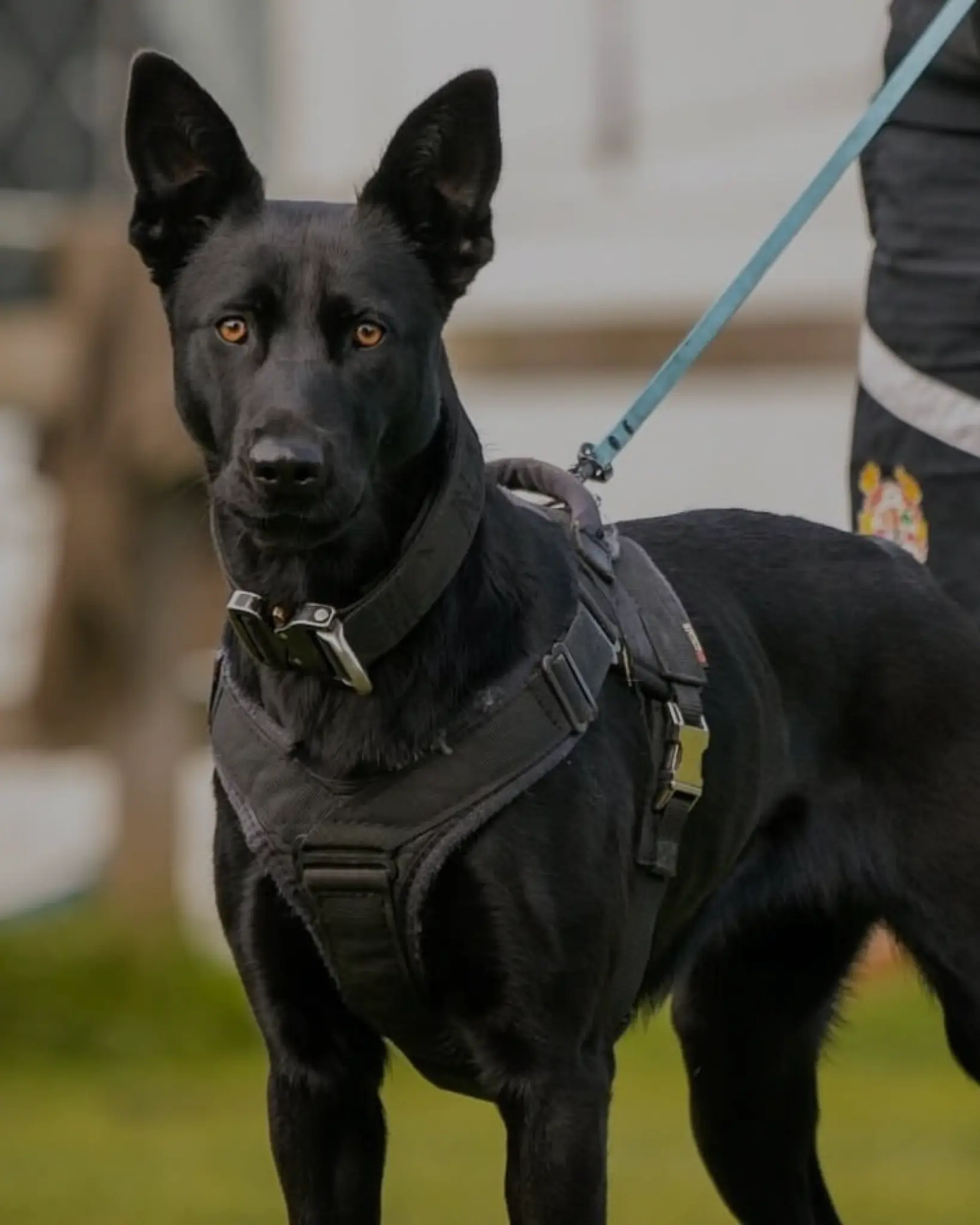
A Rottweiler who pulls towards people may be eager to say hello, but that does not make the situation easy to manage. You need a way to pass someone without being dragged into a greeting, and other people need space to choose whether they want contact.
For a Rottweiler pulling on the lead, begin with an achievable version of that everyday situation. A quiet passing exercise is a better starting point than a crowded pavement.
Separate greeting from walking past
If pulling sometimes leads to attention, your dog has a reason to try it again. Decide in advance which encounters will be a pass and which, if appropriate, might become a greeting.
Do not ask strangers to help unexpectedly. Start with a willing adult who can follow instructions, stay at a distance and avoid calling your dog over. Keep children out of training setups. If your dog is wary rather than sociable, the aim is comfortable distance, not a greeting.
Practise a few steps without a person nearby
Choose a walking side and a clear cue. In a quiet place, reward a few steps with a slack lead, placing the reward where you want your dog to walk. Build the expectation that moving forwards happens within that walking arrangement, then use a release cue when they may explore.
Equipment should suit the individual dog and handler, with fit and use explained in person. It supports a training plan alongside timing, rewards and consistent boundaries. If you cannot safely control your dog outdoors, get hands-on help before practising around people.
Add a person at a workable distance
Ask your helper to stand still, side-on and without engaging your dog. Begin far enough away for your dog to notice them and still move with you. Reward a check-in or a short stretch of slack lead, then take a wider route past.
If your dog leans into the lead and cannot turn back, make more room. Avoid holding them beside the person while repeating a command. Once a quiet pass is comfortable, change one feature at a time, such as the helper walking slowly. Busy groups are a later challenge.
Make greetings optional
Where a greeting is suitable, approach only while both dog and person remain comfortable. Keep it brief and call your dog away before excitement builds. A polite pass without contact is a complete success.
If pulling comes with freezing, growling, barking or lunging, do not treat it as a manners exercise. Create distance and seek an assessment. My article on dogs lunging at other dogs explains why the cause and context matter, even though the trigger in this case is people.