
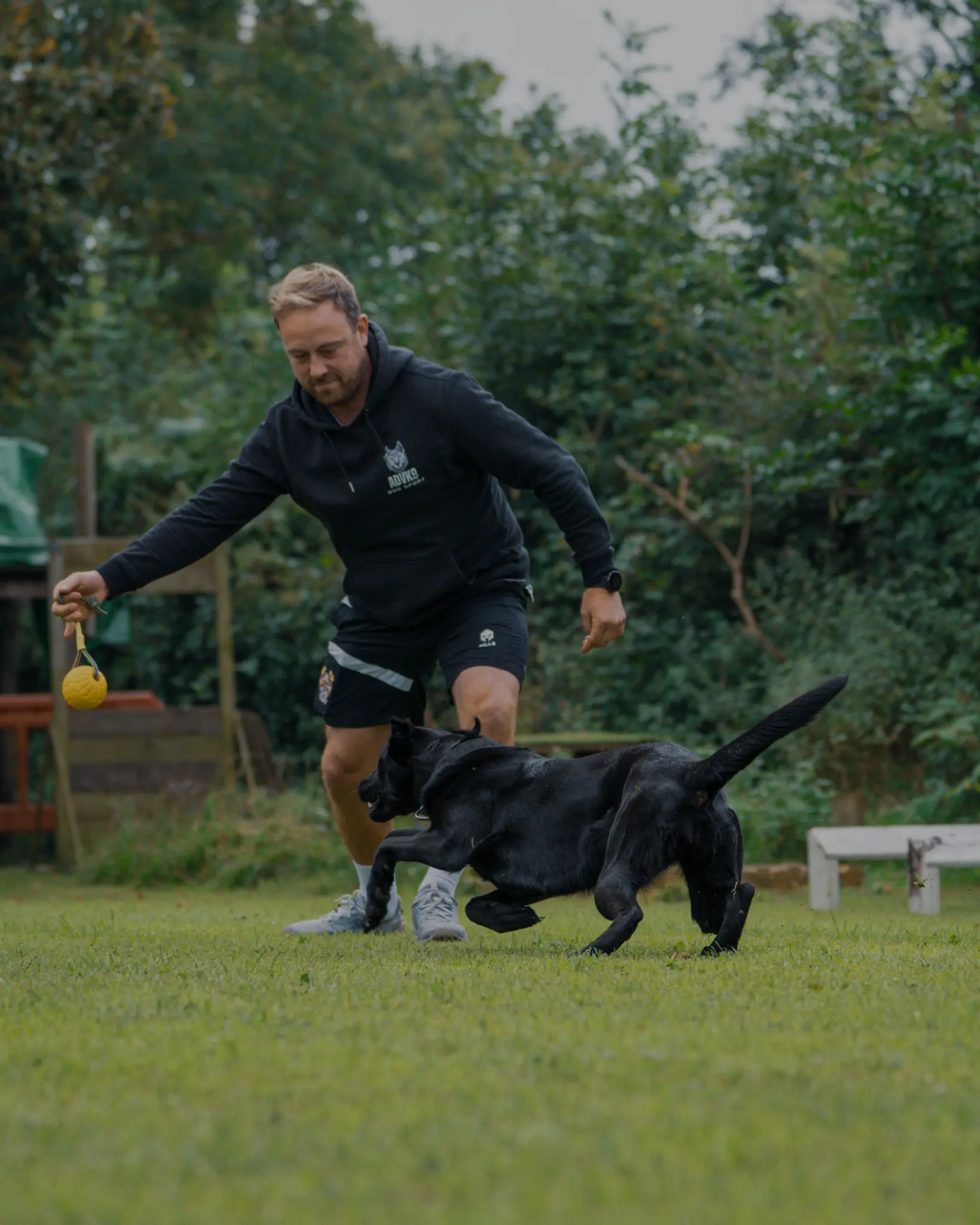
A Labrador jumping up at people may be trying enthusiastically to say hello, but the impact can be uncomfortable or unsafe. Muddy clothes are one problem; knocking someone off balance is another.
The practical goal is simple: help your dog learn how to get appropriate attention while keeping four paws on the floor. That starts with making greetings easier to manage, rather than waiting for a leap and reacting afterwards.
Choose a willing adult helper
Begin with someone your dog is comfortable around who can follow a clear plan. Ask them not to call your dog over, pat their legs or lean in excitedly. Use a quiet space with room to pause the greeting.
Keep children and anyone unsteady on their feet out of practice sessions. A secure barrier or lead can help you manage access, but avoid pulling your dog into a greeting or holding them close to a person they are worried about.
Reward before the jump happens
Start far enough from the helper that your Labrador can still respond to you. Reward four paws on the floor, then move a little closer if your dog remains comfortable. Place food low enough that collecting it does not encourage another jump.
The helper can offer brief, calm attention while paws remain down. Stop the greeting early, call your dog away and reward them for coming with you. Several easy repetitions are more useful than one long greeting that ends in repeated jumping.
Respond consistently when it goes wrong
If jumping starts, pause the greeting and use your established call-away or lead handling to create space calmly. Ask for the behaviour your dog already understands, then resume attention when appropriate. Keep the rule consistent: jumping does not gain access to the person.
Avoid kneeing your dog in the chest, rough pushing or shouting through the excitement. These reactions can add conflict or become part of the game. Set a clear boundary, show your dog the expected behaviour and follow through calmly. Any equipment or handling changes should be assessed and taught individually.
Practise beyond the familiar helper
A greeting learned with one person will need practice in other suitable situations. Change one feature at a time: a different adult, another quiet location or a little movement. Do not expect a busy gathering to be the next sensible step.
Ask friends to follow the same approach. If jumping gets enthusiastic attention from some people and a different response from others, learning becomes harder. Your Labrador also needs to learn that passing someone without greeting is normal.
If greetings involve fear, freezing, growling or biting, seek individual support. For the doorway routine, see the guide to preparing for visitors at home.