
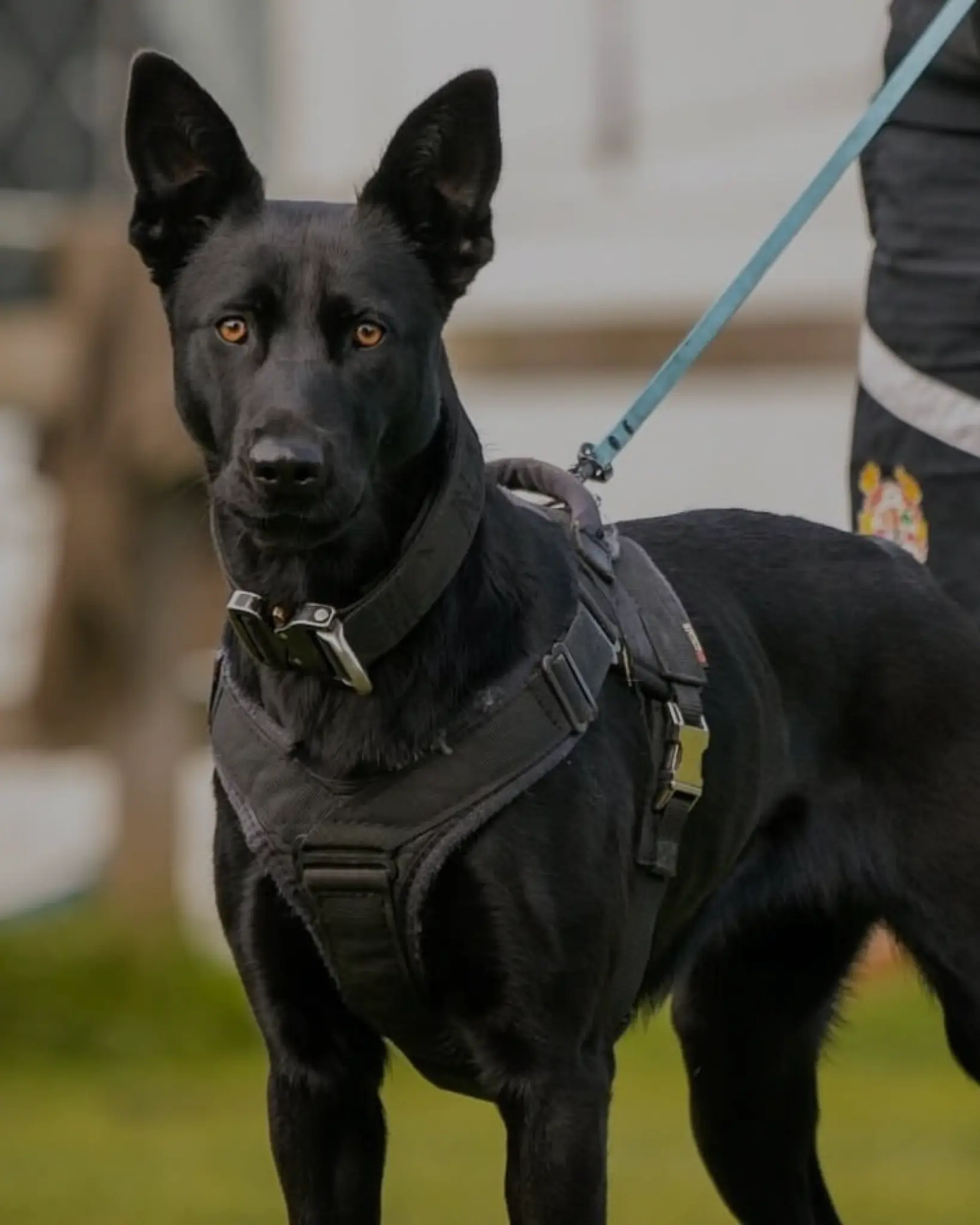
If your German Shepherd barks and lunges at other dogs, an ordinary walk can become a series of difficult decisions. You spot a dog ahead, shorten the lead and start looking for somewhere to escape.
The first step is to make those encounters more manageable. A German Shepherd who is reactive on lead needs enough space to notice another dog without immediately becoming overwhelmed. Trying to hold a sit while the other dog passes inches away may ask far more than your dog can manage.
Look at the encounter before choosing the exercise
Barking and lunging can have different causes, including fear or frustration about being unable to approach. Breed alone does not tell you which applies. Watch what happens before the noise: does your dog stop sniffing, close their mouth, stare or shift their weight forwards?
Write down the setting as well as the behaviour. A narrow pavement, a dog approaching head-on and a dog moving away across a field are different challenges. That detail is more useful than describing every reaction as stubbornness or protectiveness.
Practise moving away before you need it
Teach an easy turn in a quiet place. Give your chosen cue clearly, turn smoothly and reward your dog for coming with you. Practise the same sequence consistently, so your dog understands the instruction before you need it around a distraction.
On walks, use that turn early. Cross where it is safe, take a wider route or step behind a visual barrier. Keep your dog on secure, comfortable equipment and avoid greetings you cannot control. You are creating room for learning, not failing the walk.
Reward the moment your dog can still respond
At a suitable distance, reward your dog for noticing another dog and then checking back with you. Do not wait for a prolonged stare to become a full reaction. If they cannot disengage or move with you, increase the distance rather than repeating instructions.
Work in short, manageable sessions. A useful sign of progress might be recovering sooner after seeing a dog, or turning away more easily at the same distance. Walking directly past every dog is not the only measure of improvement.
Avoid making every outing a test
Choose routes with room to move and keep some walks deliberately easy. Do not arrange close encounters simply to see whether the training has worked. If your dog has bitten, redirects towards you or is difficult to hold safely, get individual help before setting up practice around other dogs. A sudden change in behaviour also warrants veterinary advice.
For the wider management plan, read the guide to dog lunging at other dogs.