
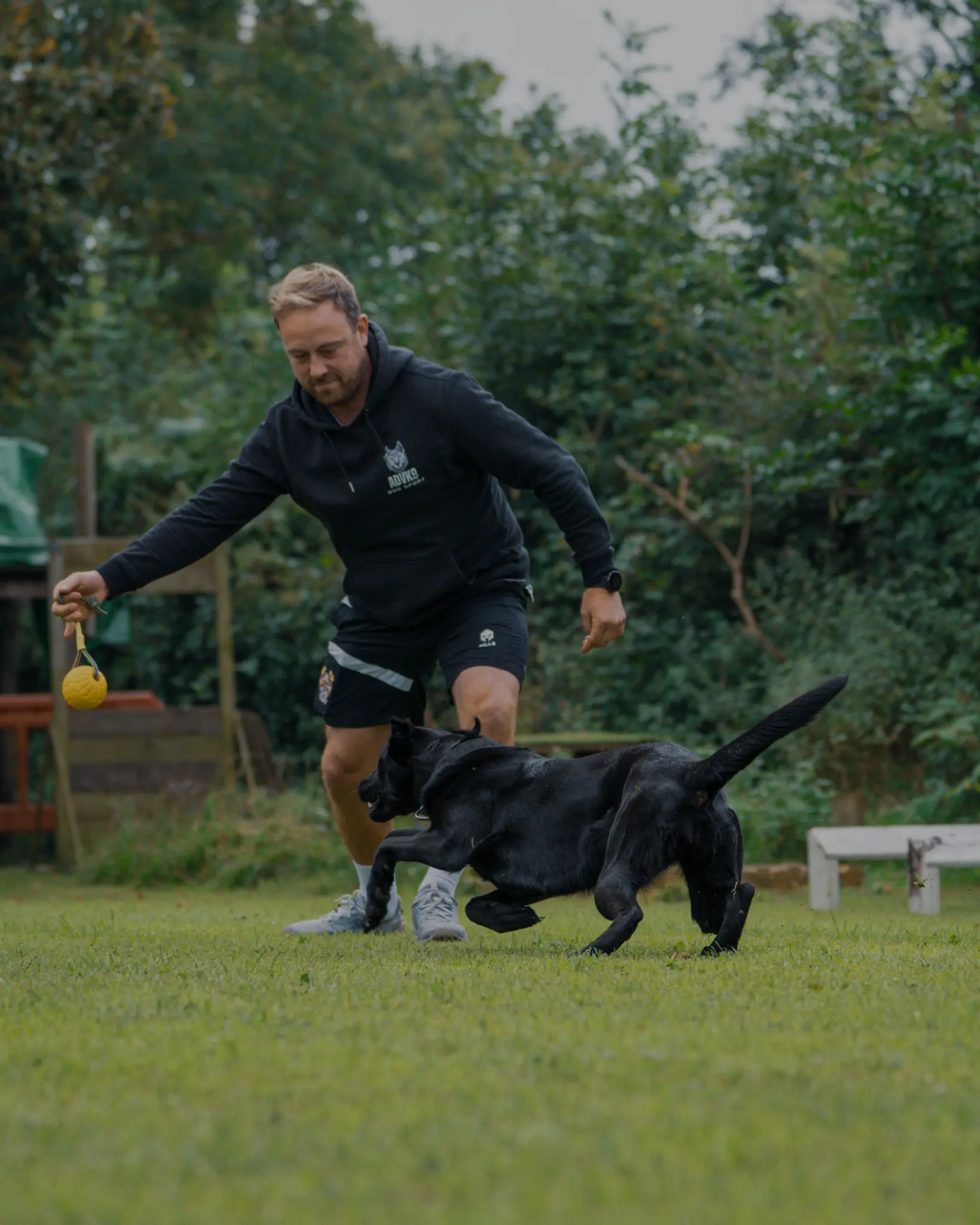
Your Dutch Shepherd enjoys a game, then grabs the lead as soon as you try to walk away. Pulling it back turns the lead into another tug toy. Asking for several commands may add to the commotion.
If your Dutch Shepherd is biting the lead after play, start by looking at how the game ends. The useful question is what would make the change from playing to walking easier, rather than how to win a struggle over the lead.
Find the point where play changes
Notice whether the grabbing follows a long session, the toy disappearing suddenly or the sight of another dog. Some dogs begin jumping, taking rewards roughly or struggling to respond before they grab anything. Those earlier changes are your chance to make the session easier.
Lead grabbing is not always excitement. Discomfort, frustration and worry can also be relevant. Check equipment fit and seek advice if the behaviour is new or appears connected with pain.
Make the next session shorter
Begin in a secure, quiet place. Choose a game your dog can stop and restart comfortably. End after a small amount of successful play, before the previous signs of escalation appear.
Teach the release cue separately, then use it consistently to finish a short game. Follow with a few familiar walking steps and reward your dog for moving with you. Practise both the start and finish of play so access to the toy has clear rules.
Keep the lead out of the game
Avoid waving loose loops of lead in front of your dog during play. Arrange the session so equipment stays safely out of the way, without tangling around legs or restricting movement. Do not wrap a lead around your hand to gain leverage.
If grabbing starts, avoid turning it into a pulling contest. Use an already learned, safe exchange if your dog can respond, then reduce the excitement and end the exercise. Do not put your hands near the mouth or grab the collar of a dog who is directing biting towards you.
Build an ordinary transition
Practise putting the toy away at a time when your dog is calm. Follow with a simple, achievable task and a reward. Later, rehearse the same sequence after a very short game.
Progress means your dog can finish play and move on without needing an increasingly complicated distraction. If the sequence breaks down, return to a shorter game or quieter setting. For the release itself, read the guide to teaching an out cue and using tug as a reward.
If teeth are contacting people, clothing grabbing is escalating or you feel unsafe, pause these games and arrange individual support. A blog cannot assess that risk.