
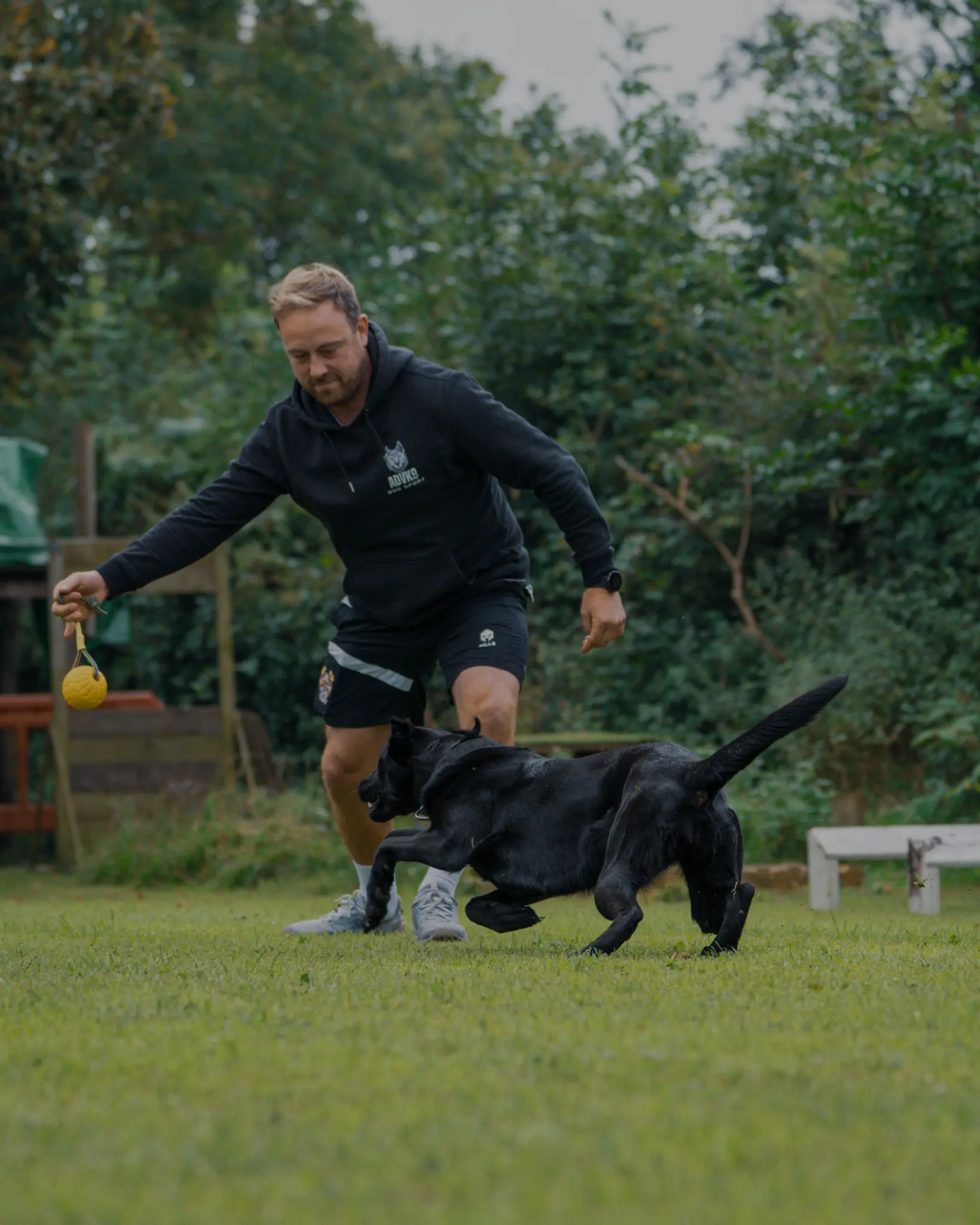
If your Border Collie lowers their body, stares and then launches towards a passing bike, do not wait for the lunge to decide what to do. The fixed attention before movement is an important warning that the situation is becoming difficult.
A Border Collie chasing bikes puts the dog, cyclist and handler at risk. Start with secure management and more space, rather than testing recall beside a cycle route.
Choose a route with room to leave
Keep your dog on a secure lead and choose walks where you can see approaching bikes and move away safely. Narrow shared paths can leave you with few options. An easier route is a practical training choice while you build skills elsewhere.
Do not allow chasing as an outlet, even in a quieter location. Do not use passing members of the public as unplanned training helpers. If your dog can pull you over or has already made contact with a cyclist, seek individual support before setting up exercises.
Describe what your dog actually notices
Record whether the reaction depends on speed, distance, direction or surprise. A stationary bike may be unremarkable while a cyclist approaching from behind causes a strong response. That difference helps define a useful starting point.
Herding ancestry may be relevant to interest in movement, but it does not diagnose the behaviour. Fear, frustration and previous learning can also affect the response. Avoid assuming your dog is simply doing their job.
Teach an exit before practising around movement
Away from bikes, teach a clear turn cue and a manageable walking position. Reward your dog for following the instruction and practise the same sequence consistently. Build understanding in a quiet setting before expecting a response around movement.
During a walk, create distance at the first sign of fixation. Reward your dog for turning back with you when they can. If you are repeating cues while they stare, the setup needs to become easier.
Keep any planned practice carefully controlled
An individual training plan may begin with a stationary bike and a willing adult helper in a safe space. Movement should only be introduced when the dog can remain comfortable, with plenty of distance and no possibility of reaching the bike.
Reduce the challenge if your dog stops responding, stiffens or becomes increasingly focused. Progress is the ability to notice movement and disengage, not merely holding still under restraint. This can take repeated practice and may need specialist behaviour support.
For the wider pattern of difficult walks, read the guide to dogs becoming over-excited outdoors.