
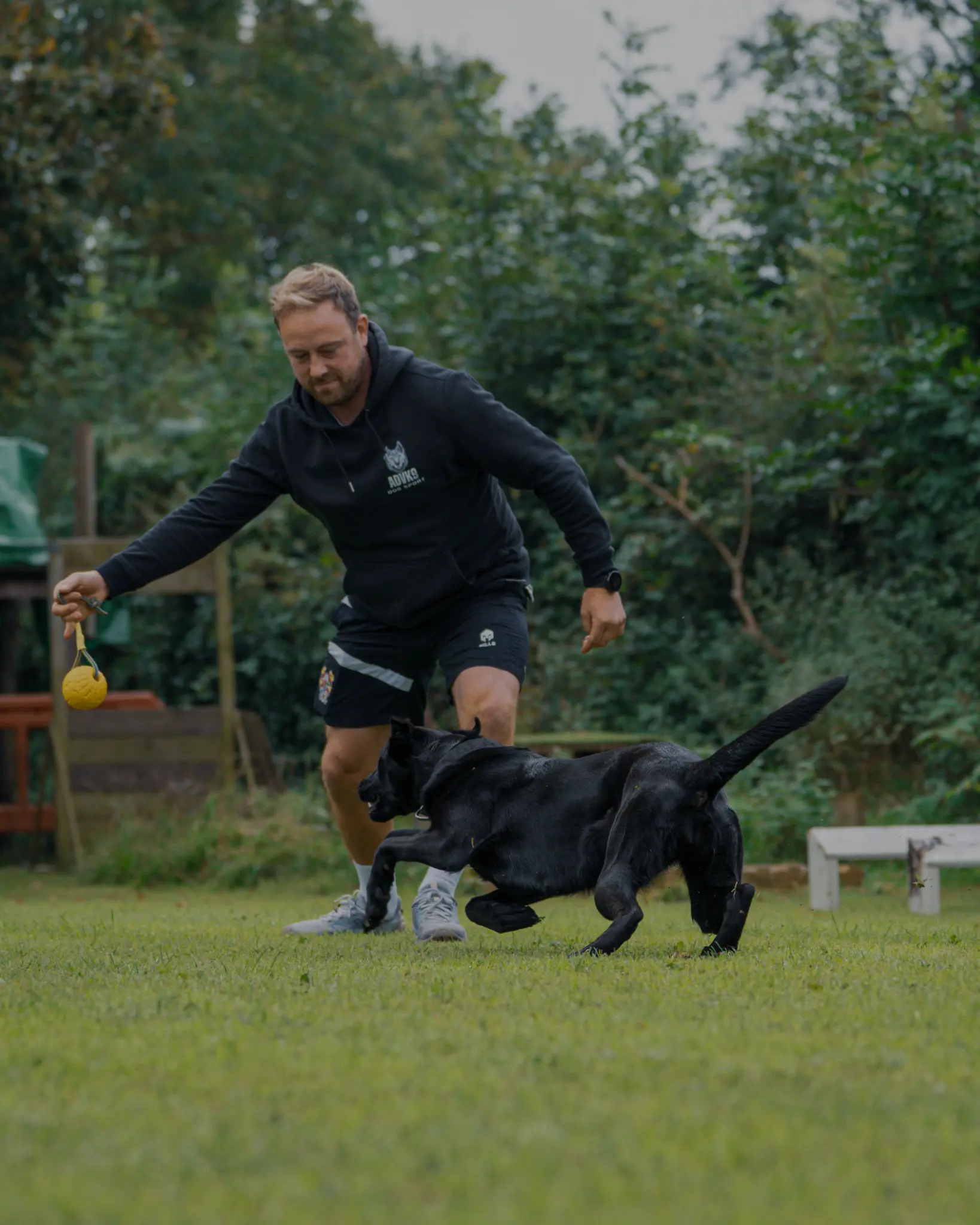
Living with a high-drive dog in a pet home can involve more management than you expected. You might be watching every turn on a walk, avoiding other dogs, or wondering whether you can take your dog to a café or a family gathering. A dog that is easy to live with in one place can still be difficult to handle in another.
“High drive” describes a kind of dog; it does not tell you which part of daily life is hardest. The practical concern might be pulling, lunging or fixating on dogs, people and movement; unreliable recall; difficulty switching off indoors; or destruction linked to boredom or excess energy. Those are different situations, so describe them separately.
Write down the situations, not just the label
Before you look for a trainer, make a short list of what is happening and where. Are you constantly managing your dog? Does recall fall apart around distractions? Is settling at home the main concern, or are walks the difficult part? Being precise makes it easier to explain what you need help with.
James’s discovery questions are practical ones: What places have you stopped taking your dog? What does a normal walk look like? What have you already tried? What would you like life to look like if the problem improved? What nearly stopped you from asking for help?
What the one-to-one programme includes
The programme is 12 one-to-one sessions over six weeks, with two sessions each week. The work is built around the dog’s exact issues. It also includes a daily training plan built around your routine, video review and feedback, and WhatsApp or voice-note support when something comes up between sessions.
Those details describe the programme; they are not a promise that every dog will have the same result on the same timetable. The published guarantee is that if there is no significant improvement or the agreed outcomes have not been met, James offers a money-back guarantee.
Bring the ordinary details
You do not need a perfect summary. Bring the difficult walk, the place you now avoid, the thing you have already tried and what you would like to do with your dog. “I want to take him to a pub garden and relax” is a clearer goal than a list of commands. It gives the conversation somewhere real to start.